
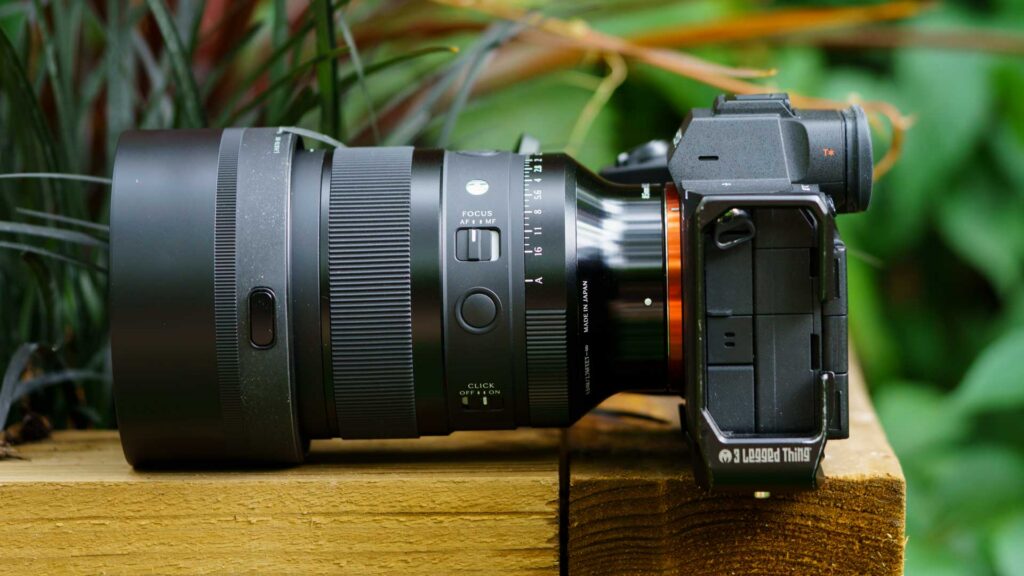
There’s something very appealing about an 85mm f/1.2 lens. The focal length is already a favourite for portraits because it gives you a comfortable working distance and a flattering perspective; then that huge aperture adds the possibility of melting an untidy background away while keeping your subject crisp.
The Sigma 85mm F1.2 DG | Art does that extremely well. In fact, one of the dangers of using it is becoming a little too fond of f/1.2. The lens produces so much detail at its maximum aperture and the transition from sharp to soft is so attractive that it’s tempting to leave the aperture ring there. Of course, there are plenty of occasions when a little more depth of field makes a better photograph.
I tested the Sony E-mount version on the 66MP Sony A7R VI and found the autofocusing impressively quick, quiet and decisive. After Reading Festival, I photographed people as they were heading home and the camera and lens were very good at finding an eye even when someone was some distance away, chatting to a friend or looking at their phone rather than directly at me.
At 905g, the Sigma 85mm F1.2 DG | Art isn’t a lens I’d describe as light, but I’m prepared to forgive some bulk when it delivers something I want. I’d use a strap for a long shoot and I’d think carefully about what else went into my bag, but the lens feels great on the camera and its controls are beautifully judged.
For portrait, wedding, event and social photographers who actively want the look that comes from an 85mm f/1.2 lens, there’s a great deal to like here.
The Sigma 85mm F1.2 DG | Art is a full-frame 85mm prime lens with an f/1.2 maximum aperture. It’s part of Sigma’s Art range and is available in L-Mount and Sony E-mount.
Sigma already has the 85mm F1.4 DG DN | Art in both mounts, but the new lens opens the maximum aperture from f/1.4 to f/1.2. That may sound like a fairly small change when you look at the numbers, but it gives you a little more light to work with and the potential for even shallower depth of field.
The extra light can be useful at a wedding reception, gig or evening event when you want to keep the shutter speed up without pushing the sensitivity too high. However, I suspect subject separation will be the stronger attraction for many photographers.
An 85mm lens naturally lends itself to portraiture. You don’t have to get uncomfortably close to shoot a head-and-shoulders portrait, but neither do you have to shout instructions to someone on the other end of the garden when you want a full-length image.
That working distance can also help portraits feel more relaxed. You’re close enough to talk to someone normally while leaving them some personal space, which is particularly useful when you’re photographing people who aren’t accustomed to being in front of a camera.
Then there’s f/1.2.
Used thoughtfully, the shallow depth of field can turn a cluttered setting into a much less intrusive background. It’s useful at events where you can’t move a chair, a sign, another person or whatever else happens to be behind your subject. You can simply let it drift out of focus.
Of course, there’s a limit. If your subject isn’t square to the camera, you may find that one eye is significantly sharper than the other. With two people, the chances of both pairs of eyes being perfectly within the plane of focus at f/1.2 are fairly slim. Having the aperture doesn’t mean you have to use it for every image.
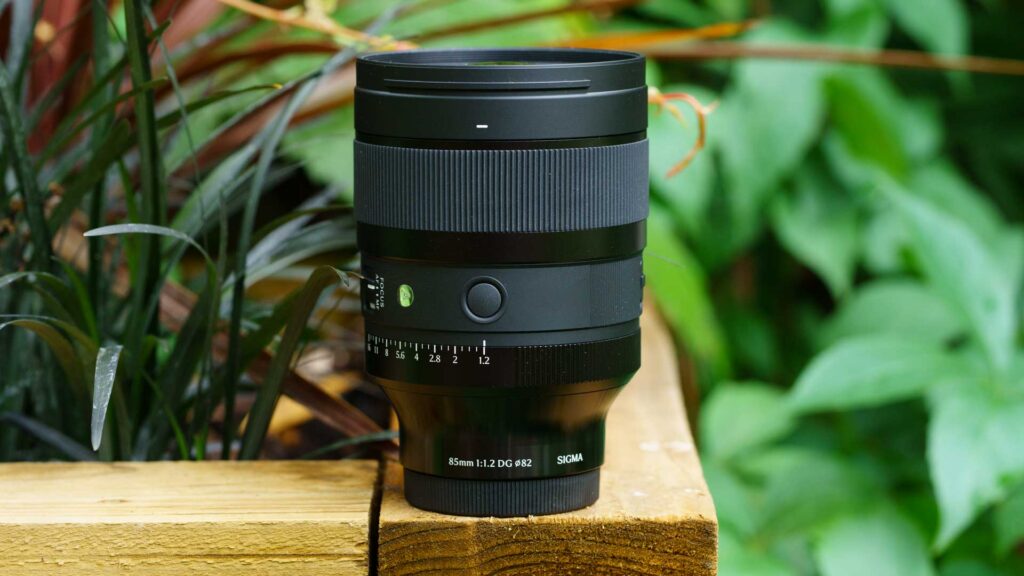
The Sigma 85mm F1.2 DG | Art is priced at £1,299 in the UK and is due to go on sale on 30 September 2026. It’s available in L-Mount and Sony E-mount.
That makes it £320 more expensive than Sigma’s existing 85mm F1.4 DG DN | Art, which is currently priced at £979.
So, the question isn’t simply whether you want an 85mm portrait lens. It’s whether the extra aperture is worth paying and carrying more for.
For some photographers, it won’t be. An 85mm f/1.4 lens already gives you very good control over depth of field and performs well in low light. If size, weight and budget are high priorities, the f/1.4 lens is likely to make more sense.
However, if you know you love working with extremely shallow depth of field, perhaps for portraits, weddings, fashion or social photography, f/1.2 offers something different. And judging by the images I’ve shot with the Sigma 85mm F1.2 DG | Art, it’s not an aperture that’s present simply to look impressive on the specification sheet.
The Sigma 85mm F1.2 DG | Art has 17 elements arranged in 12 groups. Among them are two SLD (Special Low Dispersion) glass elements and three aspherical elements.
The SLD glass is there to help control chromatic aberration, including the colour fringing that can become particularly troublesome with very fast lenses. The aspherical elements help deal with other optical aberrations while also playing a role in keeping the optical system to a manageable size.
Sigma uses a floating focusing system with two HLA (High-response Linear Actuator) units. Rather than shifting one large group of elements back and forth, the system moves separate focusing groups.
Aside from helping with focusing speed, this arrangement is designed to reduce focus breathing. That’s the small change in framing that can happen as a lens focuses from one distance to another. Still photographers may barely notice it, but it’s more relevant for video when the focus is deliberately moved during a clip.
The aperture runs from f/1.2 to f/16, and there are 13 diaphragm blades forming a rounded aperture. That’s a relatively high blade count and is good news when a major attraction of the lens is its out-of-focus rendering.
The Sigma 85mm F1.2 DG | Art focuses down to 84cm and has a maximum magnification ratio of 1:8.9. That isn’t going to turn it into a macro lens, but it allows a reasonably tight composition for portraits and details.
There’s no optical stabilisation in the lens, so you’re relying on in-body image stabilisation when your camera offers it. With the cameras that are most likely to be paired with this lens, I don’t see that as a major concern with such a wide maximum aperture.
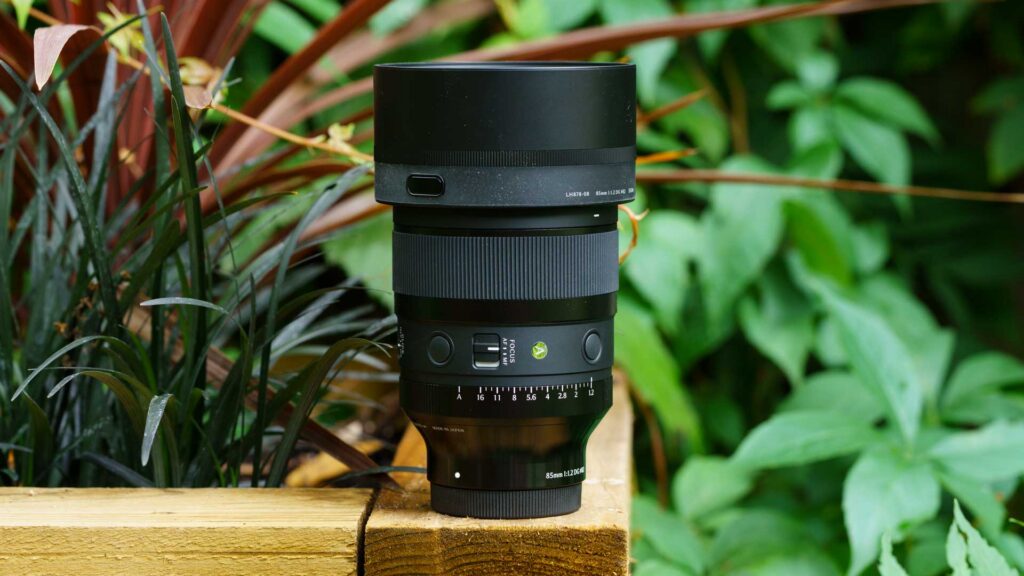
There’s a dedicated aperture ring, an aperture click switch, an aperture ring lock and an AF/MF switch. Sigma has also included two customisable function buttons.
L-Mount photographers using a compatible camera can select linear or non-linear manual focusing behaviour and adjust the focus ring’s rotation between 150 and 720 degrees. That can be particularly useful for video or anyone who has a strong preference for how quickly manual focus responds.
The lens is dust- and splash-resistant, and its front element has a water- and oil-repellent coating. That doesn’t make it waterproof, but it’s useful reassurance if you’re photographing an outdoor event and the weather isn’t behaving.
It accepts 82mm filters and comes with a hood, front and rear caps and a pouch.
Swit PowerCell Camera Battery Review
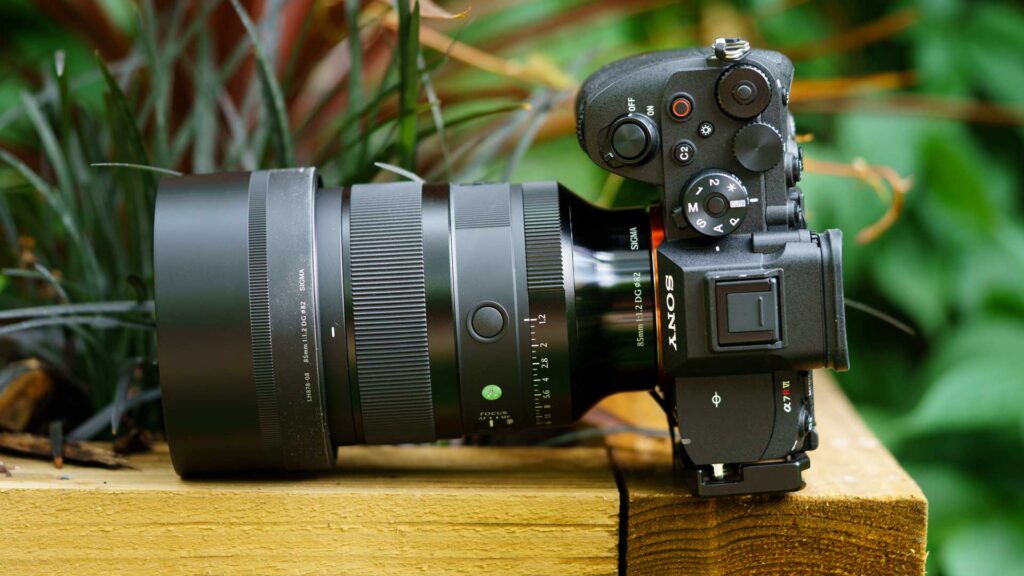
When you first pick up the Sigma 85mm F1.2 DG | Art, there’s no mistaking that you’re dealing with a substantial piece of glass.
It measures 87.2mm across and the L-Mount version is 119.7mm long, while the Sony E-mount version is 121.7mm. Both weigh 905g.
That sounds heavy because it is heavy, but context matters. Producing a full-frame 85mm lens that opens to f/1.2 requires a lot of glass and I’m more forgiving of weight when I can see a genuine photographic reason for it.
For comparison, Sony’s FE 85mm F1.4 GM II weighs 642g and measures 84.7 x 107.3mm, so it’s noticeably lighter and a little more compact, but of course it only opens to f/1.4. Perhaps more tellingly, Sigma says the 85mm F1.2 DG | Art is the smallest and lightest autofocus 85mm f/1.2 lens available. Both the Canon RF 85mm F1.2 L USM and Nikon Nikkor Z 85mm f/1.2 S tip the scales at more than 1kg, which puts the Sigma’s 905g weight into perspective.
I tested the lens on the Sony A7R VI and I like the combination. It’s certainly not something I’d want hanging from my fingers all day without a strap, but it doesn’t feel absurdly front-heavy or awkward.
As a female photographer, I’m particularly conscious of cumulative kit weight. I don’t find it especially helpful to consider a lens in isolation when I’m packing a bag because I’m going to be carrying the camera, perhaps another lens or two, batteries and all the other bits and pieces that somehow find their way into the bag.
With the Sigma 85mm F1.2 DG | Art, I’d think about what else I really needed rather than automatically packing several other large lenses. For an extended event, I’d also use a comfortable strap rather than carrying the camera by its grip between shots.
That said, once the lens is on the camera, I find it very enjoyable to use.
The focus ring is broad and turns beautifully smoothly with enough resistance to make it feel controlled rather than loose. It also lands exactly where I naturally put my left hand to support the lens.
That matters more than it may sound. With a lens weighing 905g, you’re going to support it with your left hand rather than relying on your right hand to hold everything through the camera grip. Being able to turn the focus ring with my thumb and index finger without changing that support position makes manual adjustments much easier.
I can also turn the ring with one finger if I need to.
The aperture ring sits closer to the camera and has similarly good movement. With its clicks engaged, there’s a clear step between settings without the ring feeling stiff. The sound is also fairly discreet.
A flick of the switch removes the clicks and the ring becomes very smooth. That will appeal most to videographers, but I sometimes enjoy using a de-clicked aperture ring for stills as well because the movement feels so fluid.
I also like Sigma’s decision to put the two customisable buttons 90 degrees apart around the barrel rather than just have one.
When I rotate the camera from landscape to portrait orientation, another button moves naturally into reach.
Exactly what the buttons can do depends upon the camera. On the Sony A7R VI, I set them to switch subject detection on and off.
I find that useful when I’m photographing people in a busy environment. One moment I may want the camera actively searching for an eye, then I may notice a detail, sign or object and want to stop it being distracted by someone else’s face in the background. A button on the lens lets me make that change without dropping the camera from my eye and going into the menu.
Overall, the Sigma 85mm F1.2 DG | Art feels reassuringly well made. More importantly, it feels like the controls have been positioned by people who expect the lens to be used rather than admired on a shelf.
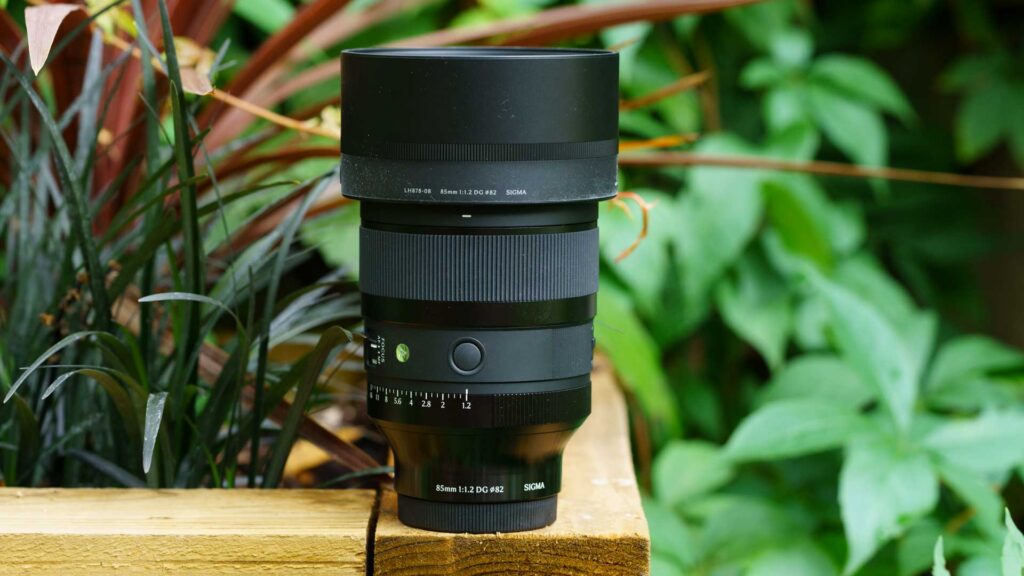
My first concern with any f/1.2 lens is what happens when it’s actually used at f/1.2.
There’s little point in paying for a large maximum aperture if you then feel obliged to shoot at f/2 to get the image quality you want. Fortunately, I didn’t find that to be the case with the Sigma 85mm F1.2 DG | Art.
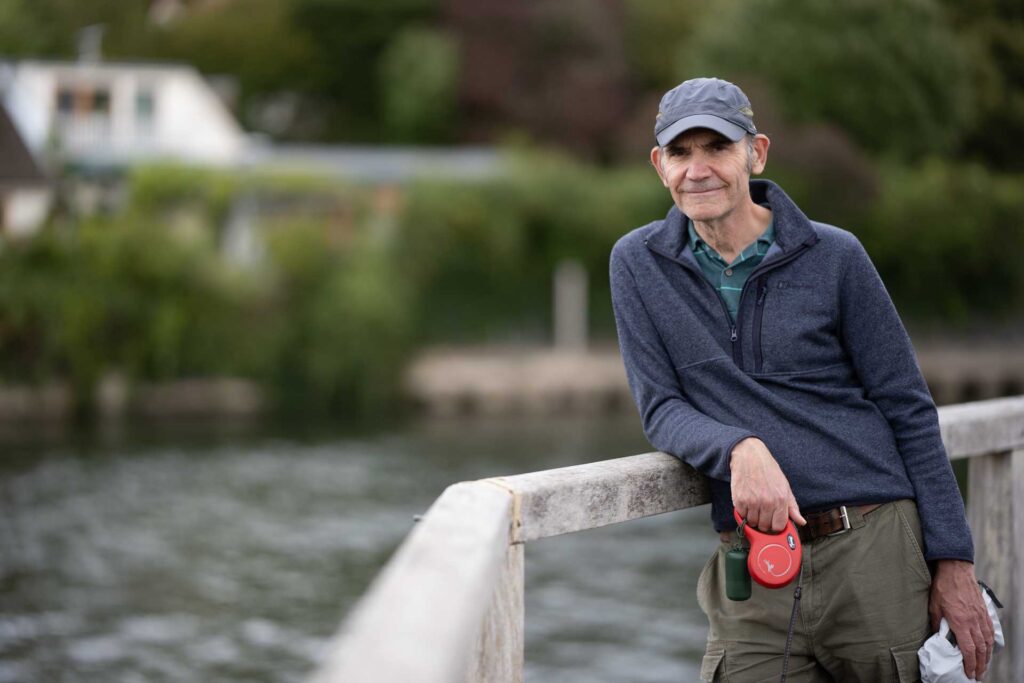
The Sigma 85mm F1.2 DG | Art produces an impressive level of detail at f/1.2. If you’ve photographed a head-and-shoulders portrait and nailed the focus on an eye, there’s enough detail to see whether the person is wearing contact lenses.
That’s the sort of performance I want from a lens like this. I can select f/1.2 because I like what it’s doing to the image rather than wondering whether I’m sacrificing too much sharpness to get the look.
Stopping down maintains a very high level of detail across the frame, but there’s no sense that the maximum aperture is a weak setting that needs avoiding.
That puts rather a lot of responsibility on the focusing system because the depth of field can be wafer thin.
Thankfully, the Sigma lens’ autofocusing is very quick, quiet and decisive on the Sony A7R VI. It doesn’t give the impression that a lot of heavy glass is being shifted around inside the barrel.
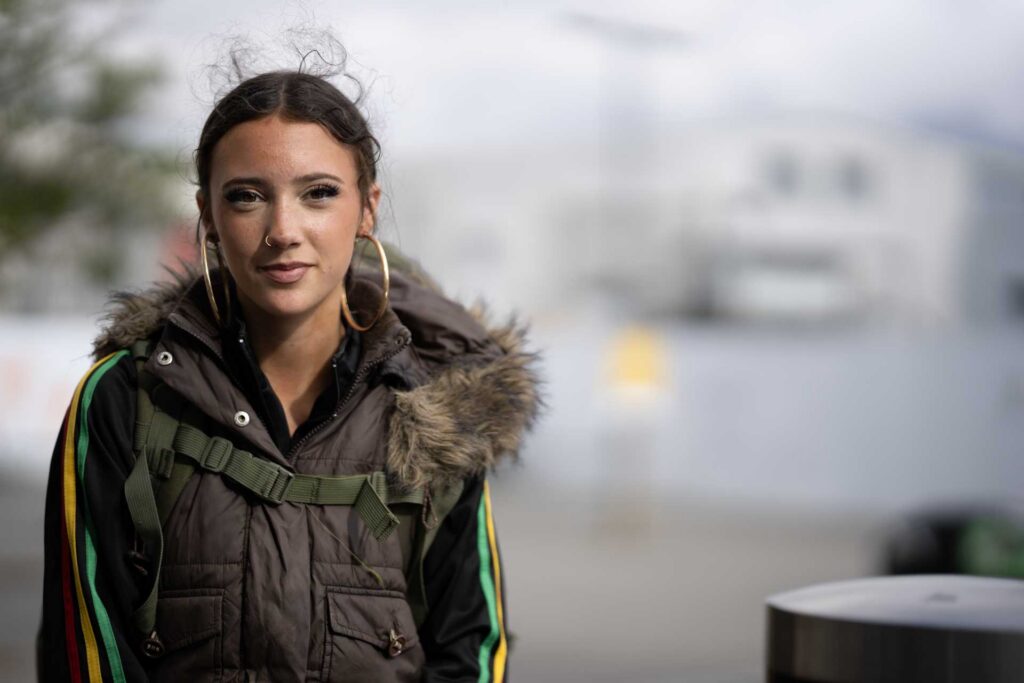
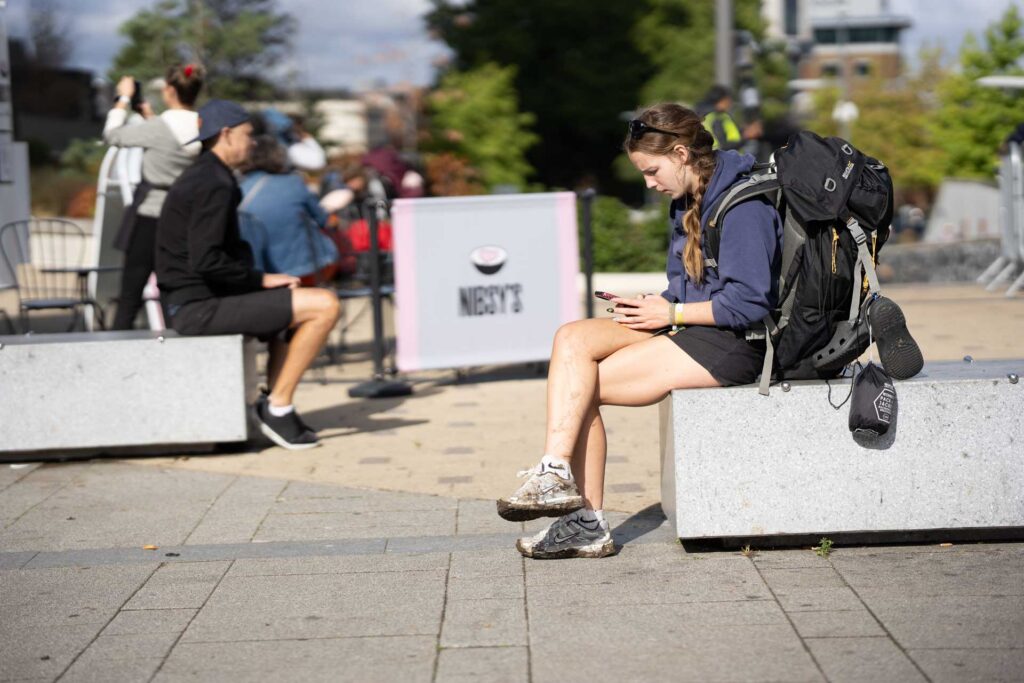
I used the combination to photograph some of the people leaving Reading Festival. It wasn’t a formal portrait session and that made it a much more interesting test for me.
I asked some people to carry on with what they were doing instead of stopping and facing the camera. Some were looking at their phones and others were talking or getting themselves organised for the journey home.
The Sony’s subject detection and the Sigma lens worked together extremely well. The system found eyes when people were a fair distance away and it continued to do so when I was seeing more of the side of someone’s face rather than getting the classic full-face portrait.
That’s useful because I don’t always want someone staring straight down the lens. A glance towards a friend or concentration on whatever they’re doing can give a photograph more life.
With the focusing taking care of the eye, I could concentrate on my framing and wait for the expression or gesture that I wanted.
That confidence becomes particularly valuable at f/1.2. If you’re working with a smaller aperture, a minor focusing error may still leave the eye looking acceptably sharp. At f/1.2 and portrait distance, you have much less room for error.
Manual focusing is also a pleasure. With the appropriate option activated on the Sony A7R VI, turning the lens’ focus ring magnifies the area under the AF point so you can see very clearly what’s happening. The smooth ring and its natural position beneath my supporting hand make small adjustments easy.
The Sigma 85mm F1.2 DG | Art also controls chromatic aberration extremely well. I went looking for coloured fringing around high-contrast edges rather than simply waiting to notice it during normal viewing and struggled to find anything worth worrying about.
I did see a trace of colour around a few particularly bright out-of-focus highlights, but it’s minor and not something that spoils the images.
Similarly, distortion is very well controlled. Straight lines look straight in the photographs. Toggling the correction profile on and off reveals a tiny change that suggests there’s a little pincushion distortion being dealt with, but it’s not something that calls attention to itself.
Vignetting is more obvious if you disable the corrections. There is slight corner shading at the widest apertures, then it reduces as you stop down and has disappeared by around f/2.8.
With the correction profile enabled, the shading is dealt with automatically and the exposure looks even across the frame.
Whether vignetting bothers you is another matter. With a portrait shot at f/1.2, I don’t necessarily mind a little natural darkening towards the corners if it helps keep attention on the subject. However, it’s good to know it’s easily removed when you want a more even result.
Naturally, the quality of the blur is a huge part of this lens’ appeal.
At f/1.2, there’s a rapid transition from the point of focus into softness and the out of focus areas are rendered very smoothly. It allows you to make a person stand out even when the environment behind them is busy. That’s one of the reasons I enjoyed using the lens around Reading Festival and the railway station. In a location like that, you can’t tidy the background or ask everyone else to move. You have to work with what’s there.
The combination of the 85mm focal length and f/1.2 aperture can simplify all that visual clutter without making the photograph feel as though it was taken against an artificial studio backdrop.
Small out-of-focus highlights are generally attractive too. Towards the edges of the image they can become cat’s-eye shaped rather than remaining round, but that’s common with fast lenses and I don’t find it particularly troublesome here.
There is a caveat to all this lovely blur.
It’s very easy to look through the viewfinder, see a beautifully soft background and decide that f/1.2 is where the aperture ring should remain. I’ve certainly felt the temptation.
But photographing two people quickly reminds you why cameras have smaller aperture settings.
Unless both people have managed to position their eyes at almost exactly the same distance from the camera, one is likely to be noticeably softer than the other at f/1.2. Even with one person, turning their head can mean that there’s quite a difference in sharpness between their nearer and more distant eye. Sometimes that’s exactly the look you want. Sometimes it isn’t.
The important thing is that the Sigma 85mm F1.2 DG | Art makes f/1.2 a genuinely useful creative option rather than an aperture that comes with an image-quality warning.

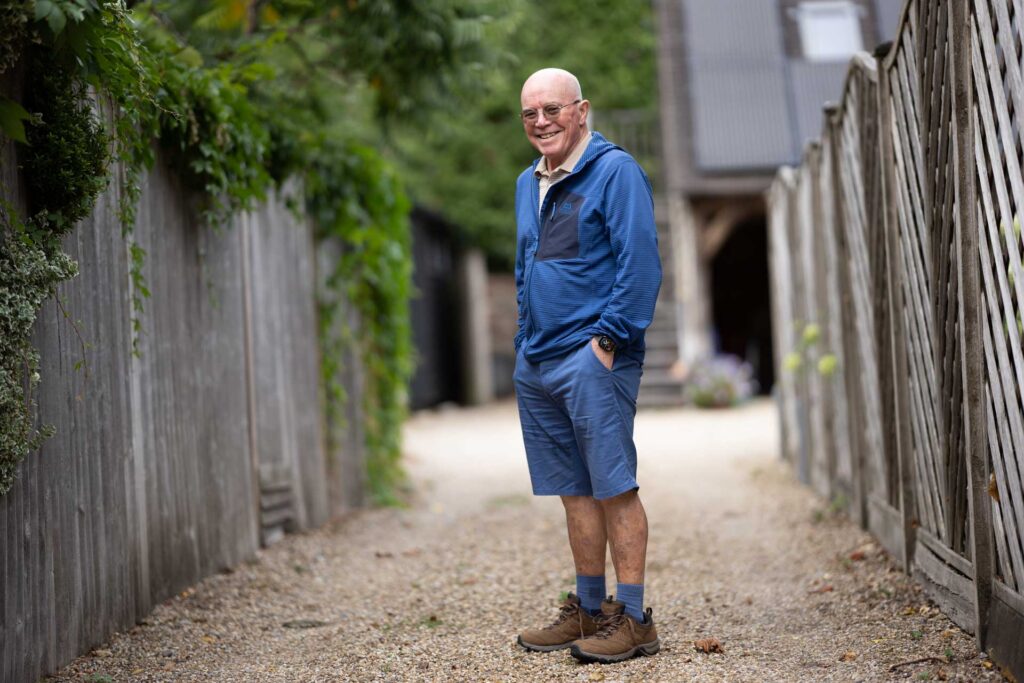
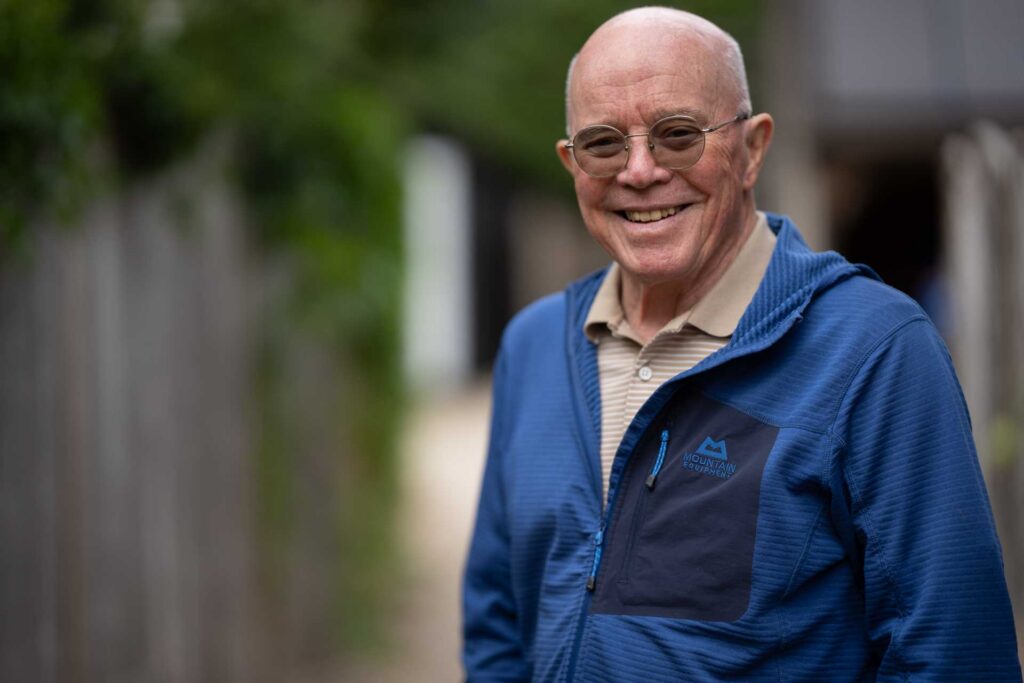
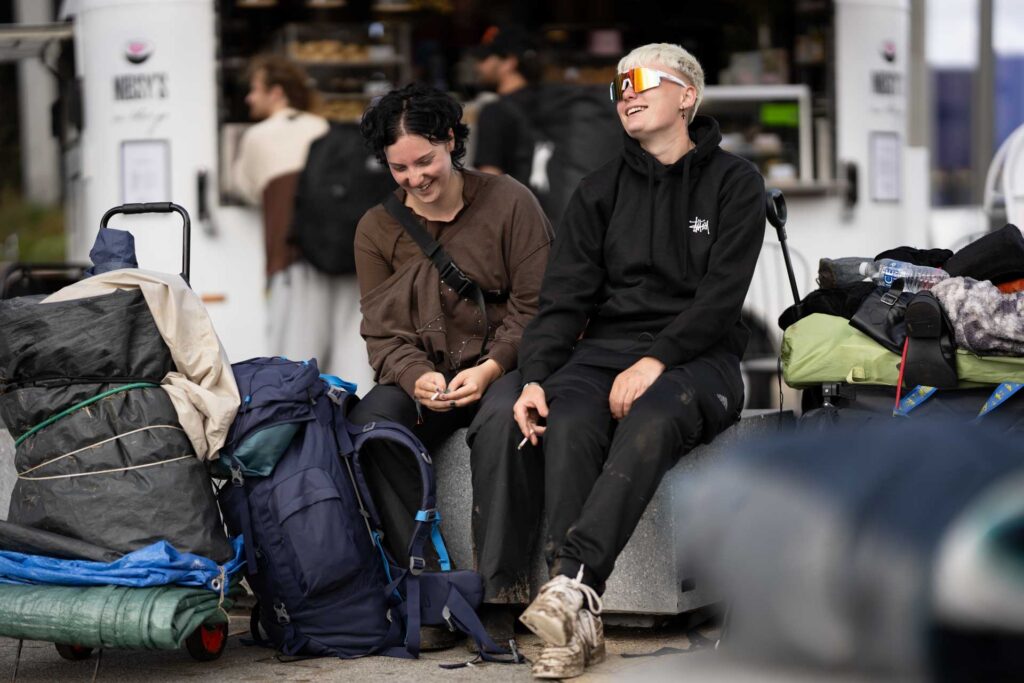






The Sigma 85mm F1.2 DG | Art is the sort of lens that makes me want to photograph people. Part of that comes down to the 85mm focal length. I like having enough space between myself and the person I’m photographing for the interaction to feel comfortable, while still being close enough to talk normally and respond to what’s happening.
Then there’s the f/1.2 aperture, which can turn an ordinary or distracting background into something much simpler and softer.
The temptation is to think of that enormous aperture as the whole story, but it isn’t. What makes the Sigma 85mm F1.2 DG | Art work so well is that Sigma hasn’t given you f/1.2 and then made you reluctant to use it.
The detail at maximum aperture is excellent and the lens’ autofocusing is fast, quiet and decisive on the Sony A7R VI. Combined with Sony’s eye detection, it allowed me to photograph people in a fairly natural way rather than continually asking them to face me and hold still.
I particularly enjoyed being able to photograph people leaving Reading Festival while they were talking, looking at their phones or simply carrying on with what they were doing. Those little moments often tell you more than a conventional pose and reliable eye detection makes them much easier to capture at a very wide aperture.
The background rendering is another strong point. The change from sharp detail to blur is quick and smooth, giving you plenty of control over how much context remains visible behind your subject.
It’s not perfect. At 905g, the Sigma 85mm F1.2 DG | Art takes up a meaningful chunk of my camera bag’s weight allowance and I’d always use a strap if I was going to carry it for a few hours. That weight also needs a little context. Sony’s FE 85mm F1.4 GM II is considerably lighter at 642g, but it has a smaller f/1.4 maximum aperture. The comparable Canon RF 85mm F1.2 L USM and Nikon Nikkor Z 85mm f/1.2 S are both heavier than the Sigma, at 1,195g and 1,160g respectively. So while 905g is certainly noticeable, Sigma has managed to keep its 85mm f/1.2 below the 1kg mark, which makes the weight rather easier to accept.
For women considering this lens, I think that’s worth taking seriously. It isn’t a question of whether you can lift 905g. Of course you can. The more relevant question is whether you want to carry it on the camera for an afternoon along with everything else you need.
For me, the answer would depend on the shoot. If I wanted a small kit for wandering around all day, I’d choose something lighter. If I was photographing portraits, a wedding or an event where the f/1.2 aperture would make a real difference to my pictures, I wouldn’t think twice about making space for it. I love the look it gives images.
You also need to resist the urge to treat f/1.2 as the default. It’s wonderful when you want one eye or one person to pop out of their surroundings, but sometimes the better photograph is the one taken at f/2, f/2.8 or smaller because the subject needs more depth of field.
That’s really the appeal of the Sigma 85mm F1.2 DG | Art. It gives you another creative option without forcing you to compromise when you use it. The lens produces sharp subjects, soft backgrounds and dependable focusing while its aperture ring and well positioned function buttons make it enjoyable to work with.
At £1,299, it’s an investment and the weight means it won’t be right for everyone, but photographers who already know why they want an 85mm f/1.2 are unlikely to need much persuading once they see what it can do.