
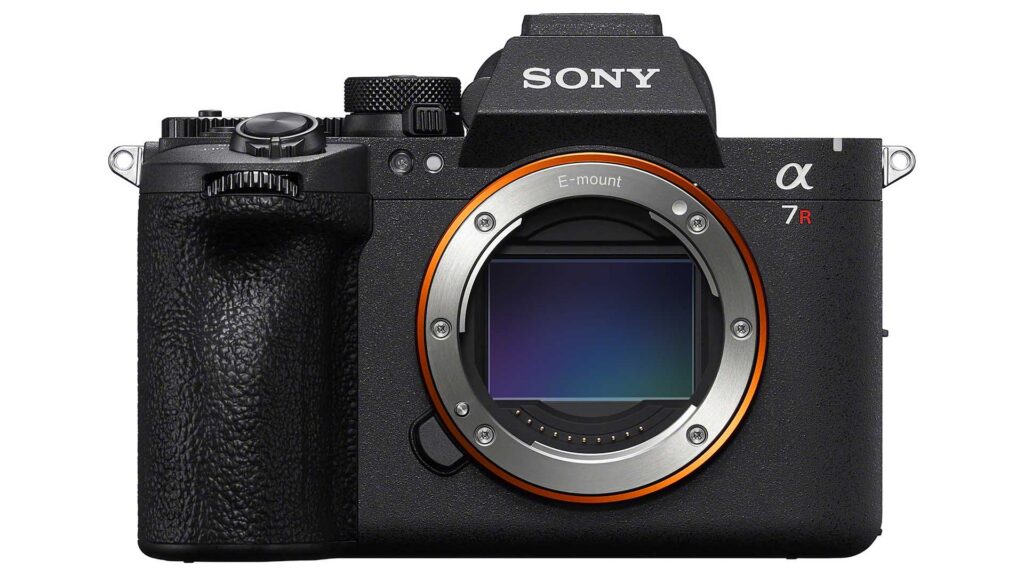
The Sony A7R VI looks like a significant step forward for Sony’s high-resolution full-frame camera line. I’m pleased to see Sony combining a 66.8MP sensor with faster shooting, stronger subject recognition, better stabilisation and thoughtful handling refinements such as illuminated controls and an improved grip.
While it’s nice to see an increase in pixel count, I’m also glad Sony hasn’t chased a headline-grabbing 100MP sensor. Noise control, dynamic range and workflow matter just as much as outright resolution, especially for photographers who shoot in low light or regularly deal with large batches of images. On paper at least, Sony seems to have focused on making the A7R VI a usable high-resolution camera rather than simply chasing big numbers.
The Sony A7R VI is a high-resolution full-frame mirrorless camera and the successor to the Sony A7R V. It features a new 66.8MP effective Exmor RS back-illuminated stacked CMOS sensor along with Sony’s latest Bionz XR II processing engine.
Sony’s A7R series has traditionally been aimed at photographers who need very high levels of detail for commercial work, landscape photography, portraiture and large prints. However, the Sony A7R VI appears to shift the series further into hybrid and action territory with blackout-free 30fps continuous shooting, improved subject recognition and advanced video features.
It feels as though Sony is trying to bridge the gap between the A7R series and the faster Alpha bodies, creating a camera that offers both resolution and speed rather than forcing photographers to choose between the two.
The Sony A7R VI price is approximately £4,500 in the UK and €5,100 in Europe.
Sony announced the camera on 13th May 2026, and it is expected to go on sale in June 2026.
Read Our Sony FE 100-400mm F4.5 GM OSS Review
The headline feature is the new 66.8MP Exmor RS back-illuminated stacked full-frame sensor. Sony has increased the resolution from the A7R V’s 61MP sensor, but the more important upgrade is the stacked architecture. This enables faster readout speeds, blackout-free shooting and reduced rolling shutter distortion.
Sony says the new sensor provides improved low-light performance and better colour reproduction, helped by an updated AI (artificial intelligence)-trained auto white balance system that is designed to recognise lighting conditions more effectively. Sony demonstrated this during the briefing with examples shot in woodland where the newer camera produced warmer, more natural greens and more believable colour than the A7R V.
The sensor is paired with Sony’s new Bionz XR II processor, which combines autofocus and AI processing into a single unit. Previously, Sony split these tasks across separate processors. The new arrangement should improve communication speed between subject recognition and autofocus tracking.
The Sony A7R VI can shoot 14-bit RAW files at up to 30fps with the electronic shutter while maintaining autofocus and auto exposure. Switching to the mechanical shutter gives a maximum speed of 10fps. Sony also states that the camera can shoot JPEGs at 10fps for more than 1000 images.
Sony has also added Pre-Capture and Continuous Shooting Speed Boost. Pre-Capture buffers images for up to one second before the shutter is fully pressed, which helps with unpredictable moments such as photographing birds taking flight or children suddenly running into the frame. Continuous Shooting Speed Boost allows photographers to jump between frame rates while shooting, which is very useful when you only need maximum speed for brief moments of action.
The autofocus system features 759 phase-detection autofocus points covering 94% of the frame. I’m expecting the Sony A7R VI’s autofocusing to be quick and decisive – but I’ll check. It’s sensitive down to -6EV but Sony has also included Bright Monitoring mode, which extends sensitivity to -11EV for astrophotography and other very dark scenes.
Sony’s Real-time Recognition AF+ system supports humans, animals, birds, insects, cars, trains and aircraft. Human pose estimation has also been upgraded to recognise smaller subjects and improve tracking in crowded scenes or team sports. Sony was especially keen to highlight improved subject separation during football and rugby-style situations where players repeatedly pass in front of each other.
For video shooters, the Sony A7R VI can record 8K video at up to 30p with a 1.2x crop and 4K at up to 120p. Sony says the camera oversamples 4K 60p footage from 5K resolution for improved detail. There’s also Dual Gain video mode, designed to improve shadow detail and dynamic range, particularly in challenging lighting.
The camera includes Sony’s Dynamic Range Optimiser (DRO) with expanded adjustment up to Level 8, helping preserve highlights and shadows in high-contrast scenes. Sony positions this as particularly useful for wedding and event photographers who need more usable JPEGs straight from the camera.
Sony has simplified the RAW menu structure from five options down to three and introduced a new Compressed HQ RAW setting to balance image quality and file size more effectively. Composite RAW shooting and Extended RAW processing are also available through Sony’s Imaging Edge Desktop software.
Read Our Sony FE 100mm F2.8 Macro GM OSS Review
The Sony A7R VI looks very familiar to anyone who has used a recent Alpha camera, but Sony has refined several aspects of the body design.
I haven’t had the chance to handle the Sony A7R VI yet, but based on the briefing, first impressions suggest Sony hasn’t made any major changes to the overall control layout. That’s probably good news for existing Alpha users, although I’ll be able to confirm how the camera actually feels in the hand once I get the opportunity to shoot with it tomorrow.
The grip has been redesigned for improved comfort and security. A deeper grip makes a noticeable difference during long shoots or when using heavier lenses for wildlife, weddings or events, and it’s something I always appreciate on higher-resolution cameras that are likely to be paired with larger lenses.
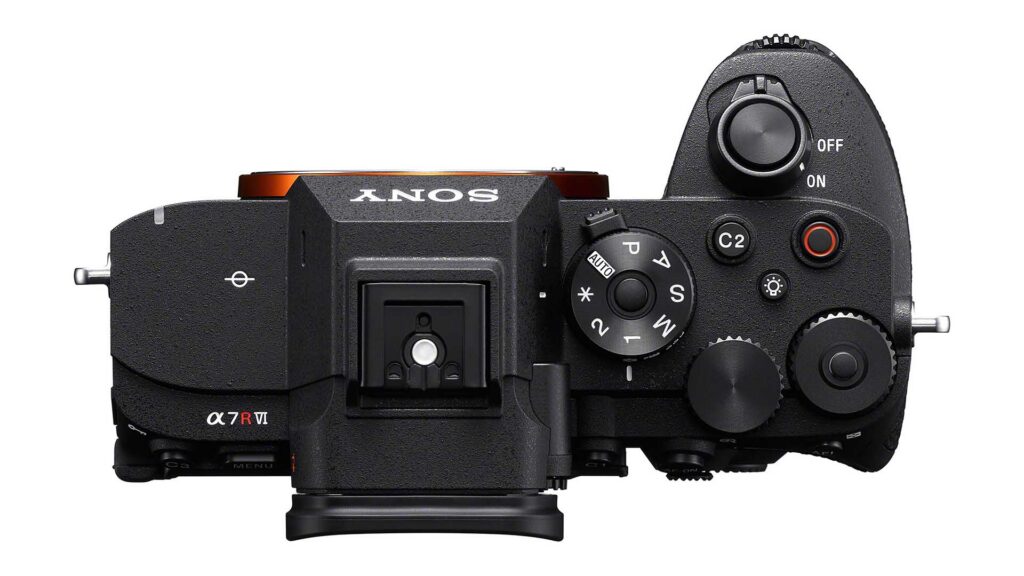
One of the most interesting upgrades is the addition of illuminated controls. There’s a dedicated button on the top of the camera that lights up key controls, making them easier to use in dark environments. It might sound like a small thing, but if you’ve ever fumbled around trying to change settings during a night shoot or in a dark reception venue, it actually sounds useful.
Sony has also introduced a new memory recall system. When the mode dial is set to “*”, shooting presets can be selected through the menu rather than assigning just one memory setting to the dial.
The electronic viewfinder has also been upgraded significantly. The Sony A7R VI features a 9.44-million-dot OLED EVF (electronic viewfinder) that is three times brighter than the A7R V’s viewfinder. It also supports a DCI-P3 colour gamut instead of sRGB and includes an HDR (high dynamic range) display mode for more accurate previewing of highlights and shadows.
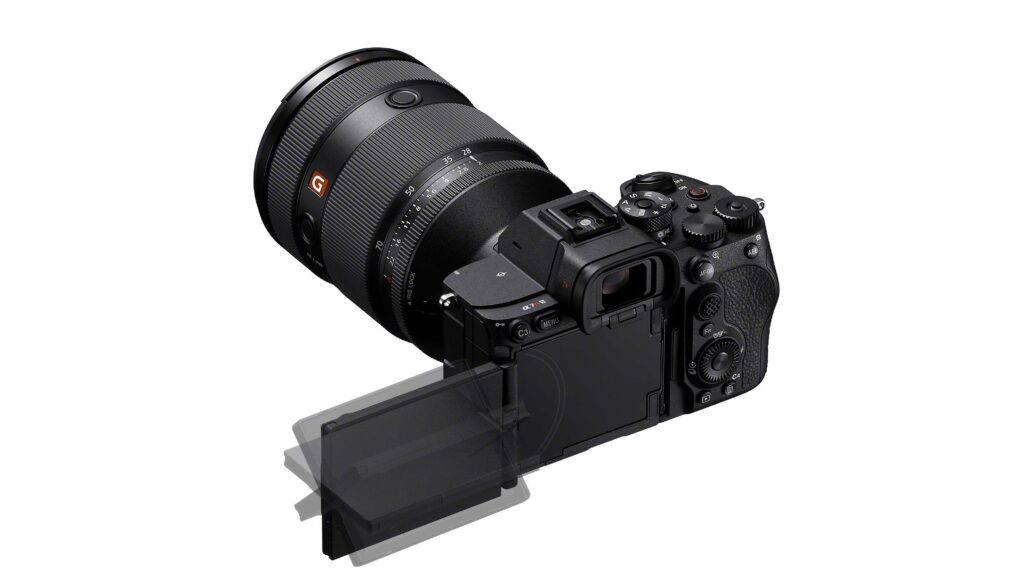
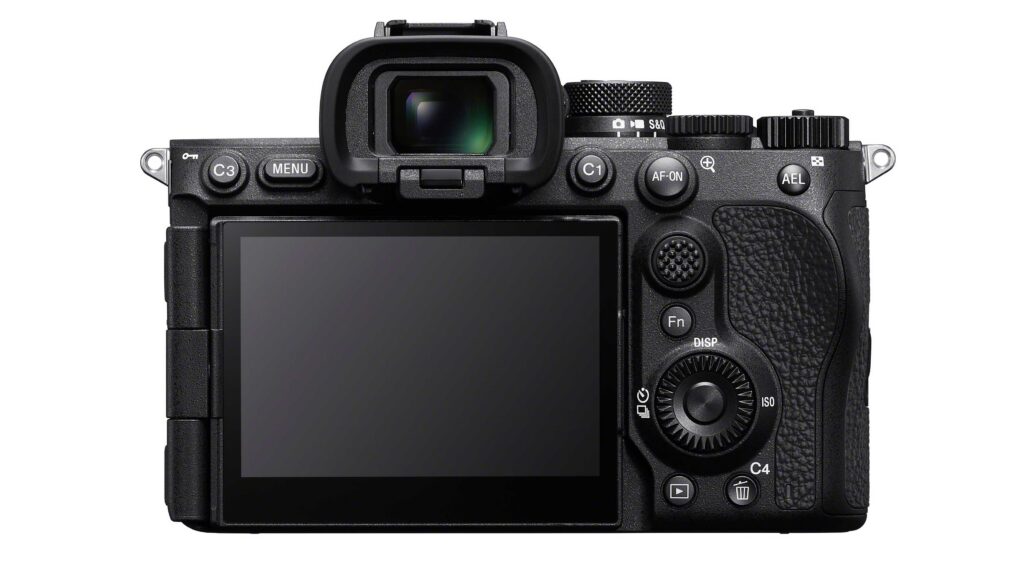
On the back of the camera is Sony’s 4-axis multi-angle LCD (liquid crystal display), which remains one of the more flexible screen designs available. I still prefer this style of screen to a standard vari-angle design because it works well for both horizontal and vertical shooting without pulling the screen too far away from the body.
The Sony A7R VI has two CFexpress Type A and UHS-II compatible card slots along with improved connectivity. There are now two USB-C ports. The upper port is designed for high-speed data transfer while the lower port handles power delivery. This should make tethering, livestreaming and extended video recording more practical.
Sony has also introduced a new 2670mAh battery that offers around 17% greater capacity than the older NP-FZ100 battery. Unfortunately, the new battery is not backwards compatible with earlier Alpha cameras. However, Sony has added fast-charging support and a new battery health check feature to help photographers monitor battery condition over time.
Sony also says the camera has improved heat dissipation for better reliability during long recording sessions.
I haven’t yet had the chance to shoot with the Sony A7R VI myself, so these are very much first impressions based on Sony’s technical briefing and demonstrations. However, I’m due to spend some hands-on time with the camera tomorrow, which should give a much clearer idea of how these specifications translate into real-world shooting performance.
Even so, the camera already looks promising. The biggest change appears to be the combination of very high resolution with genuinely fast performance. Previous A7R cameras were excellent for slower, deliberate photography, but the Sony A7R VI seems capable of handling much faster action without compromising detail.
The 30fps shooting rate combined with 14-bit RAW capture is impressive for a 66.8MP camera. Wildlife photographers in particular should appreciate the ability to crop heavily while still maintaining excellent detail. At the same time, the stacked sensor should help reduce rolling shutter distortion, which has traditionally been one of the compromises with electronic shutters on high-resolution cameras.
Sony’s autofocus improvements also sound meaningful rather than incremental. The Real-time Recognition AF+ system is designed to recognise subjects more accurately and maintain focus even when subjects briefly disappear behind obstacles or other people. That could be especially useful for weddings, events and sport where subjects move unpredictably.
Meanwhile, the image stabilisation is rated at up to 8.5 stops in the centre and 7 stops at the edge of the frame. With such a high-resolution sensor, effective stabilisation becomes even more important because even tiny movements can soften fine detail.
Sony also appears to have focused heavily on workflow improvements. The new Compressed HQ RAW format, simplified RAW options and faster connectivity should help photographers manage the enormous files this camera will produce. That may not sound exciting, but for anyone editing hundreds or thousands of images, it matters just as much as the sensor itself.
Video capability is another area where the A7R VI looks stronger than previous A7R cameras. The ability to shoot 8K 30p and 4K 120p alongside features such as LUT (Look-Up Table) import, Dynamic Active stabilisation, auto framing and improved internal microphones makes it a more serious hybrid camera.
Sony says the internal microphones now reduce background noise such as air conditioning or lens motor sounds more effectively, which could be useful for vloggers and solo creators.
The Dual Gain video mode sounds particularly interesting for landscape or cinematic video work because it is designed to improve shadow detail and tonal transitions. However, it does have some limitations, including support only for 4K recording up to 30fps and slower readout speeds.
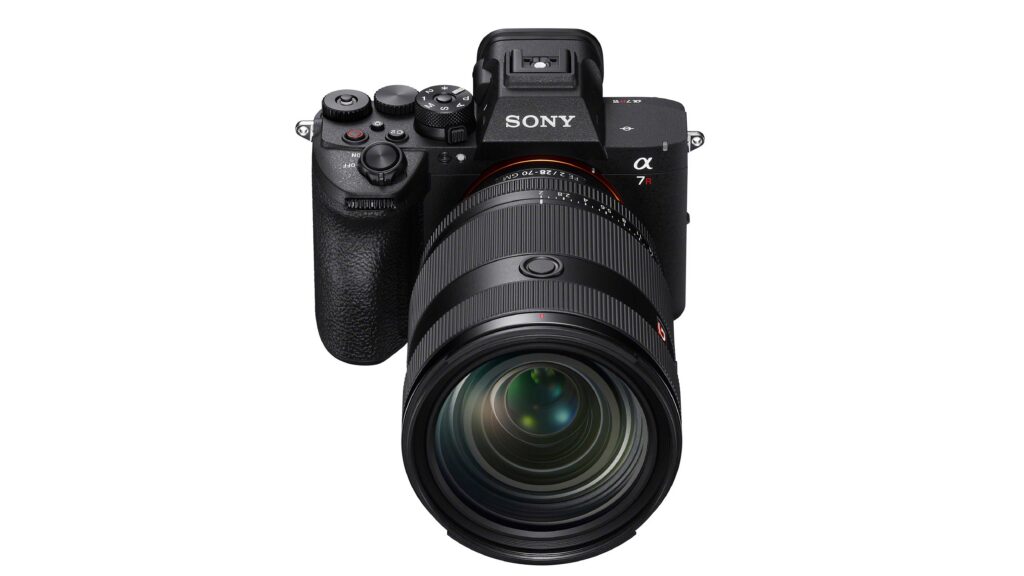
Browse and download full-resolution images from the Sony A7R VI – please respect our copyright.
The Sony A7R VI looks like one of Sony’s most ambitious high-resolution cameras to date. Instead of focusing solely on resolution, Sony appears to have created a camera that combines detail, speed and versatility in a much more balanced way.
I particularly like the sound of the improvements to the grip, the illuminated controls and the flexible screen design because they should make the camera easier and more comfortable to use during long shoots. They may sound like small upgrades, but they are exactly the kind of practical refinements that make a difference when you use a camera day after day.
The autofocus system also sounds genuinely improved, especially for wildlife, events and portrait photography. Combined with blackout-free 30fps shooting and reduced rolling shutter, the Sony A7R VI could appeal to photographers who previously dismissed the A7R series as being too slow for action work.
At around £4,500, this is clearly a serious investment, but on paper at least, the Sony A7R VI looks as though it brings the speed of Sony’s action cameras much closer to its high-resolution line.
I’ll reserve final judgement until I’ve had the chance to use a production camera properly, but based on Sony’s briefing, the A7R VI could become one of the most capable all-round high-resolution cameras available.