
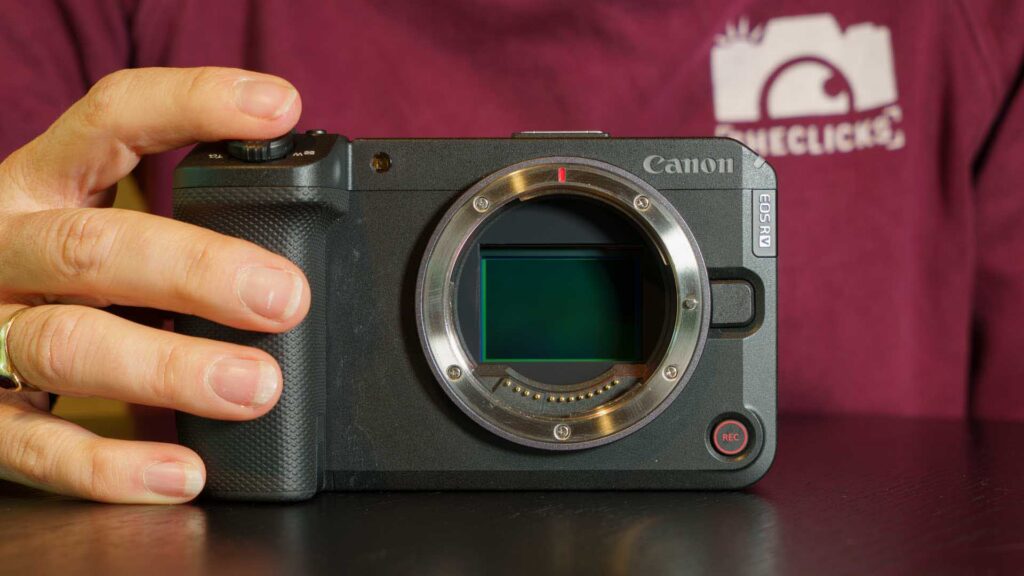
The Canon EOS R6 V is Canon’s most advanced EOS V-series camera yet, bringing full-frame 7K recording, open-gate video, in-body stabilisation and active cooling into a body that feels designed for solo creators and handheld shooting. It sits somewhere between the Canon EOS R6 Mark III and the Cinema EOS C50, combining the accessibility of the EOS R system with video-focused features that make much more sense for modern content creation than simply adapting a photography camera for video.
What strikes me most about the EOS R6 V is that Canon seems to have thought carefully about how creators actually work. The vertical tripod mount, front record button, zoom lever and simplified interface all point towards practical everyday use rather than specification-sheet bragging rights.
For women creating content independently, whether that’s YouTube videos, social media campaigns, interviews, travel content, tutorials or photography-led filmmaking, the EOS R6 V seems like one of the most approachable full-frame hybrid cameras Canon has made.
Read Our Canon EOS R6 III Review
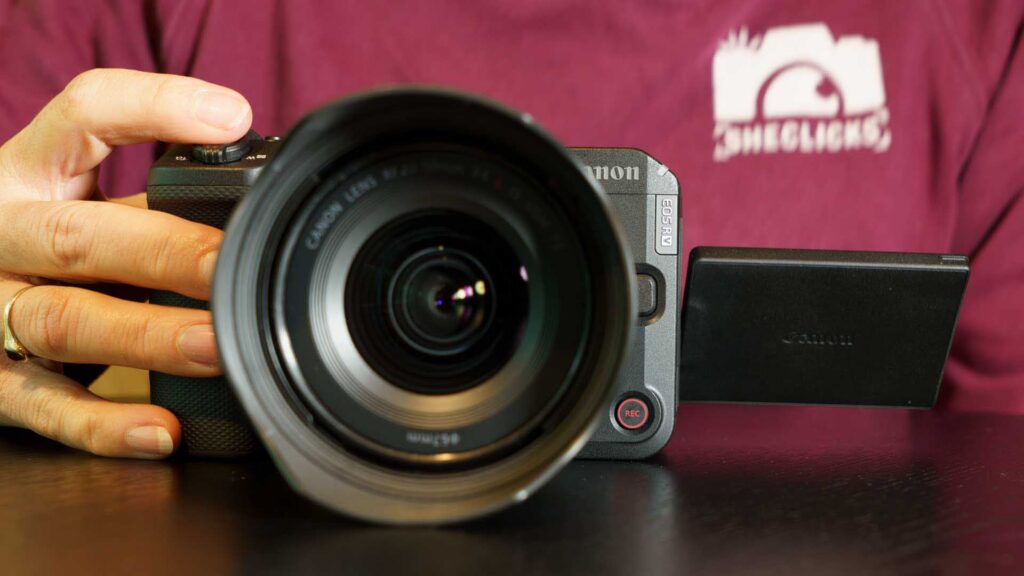
The Canon EOS R6 V is a full-frame mirrorless camera aimed at video-first creators who want high-end recording options without moving into Canon’s Cinema EOS range.
Canon positions it at the top of its relatively new EOS V-series line-up, sitting above cameras such as the EOS R50 V and PowerShot V1. Unlike the EOS R6 Mark III, which is primarily aimed at photographers who also shoot video, the EOS R6 V is designed around video creation first and stills second.
That means the design priorities are different. Instead of a viewfinder-centric body built around photography traditions, the EOS R6 V focuses on handheld filming, vertical shooting, livestreaming and long-form content creation. Canon describes it as a camera for creators wanting to monetise their content and achieve a more cinematic look with the simplicity of an EOS interface.
At the same time, this is still a capable stills camera, albeit without a viewfinder. The EOS R6 V can capture 32.5MP images at up to 40fps using the electronic shutter, and it includes pre-continuous shooting to help capture unpredictable moments.
Read our Canon RF 20-50mm F4L IS USM PZ
The Canon EOS R6 V costs £2,399.99 body only.
Sales start on 24th June.
The Canon EOS R6 V uses a 32.5MP full-frame sensor paired with Canon’s DIGIC X processor and Dual Pixel CMOS AF II (Autofocus). It shares its sensor with the EOS R6 Mark III and EOS C50, which means we can expect comparable colour and image quality performance from all three cameras.
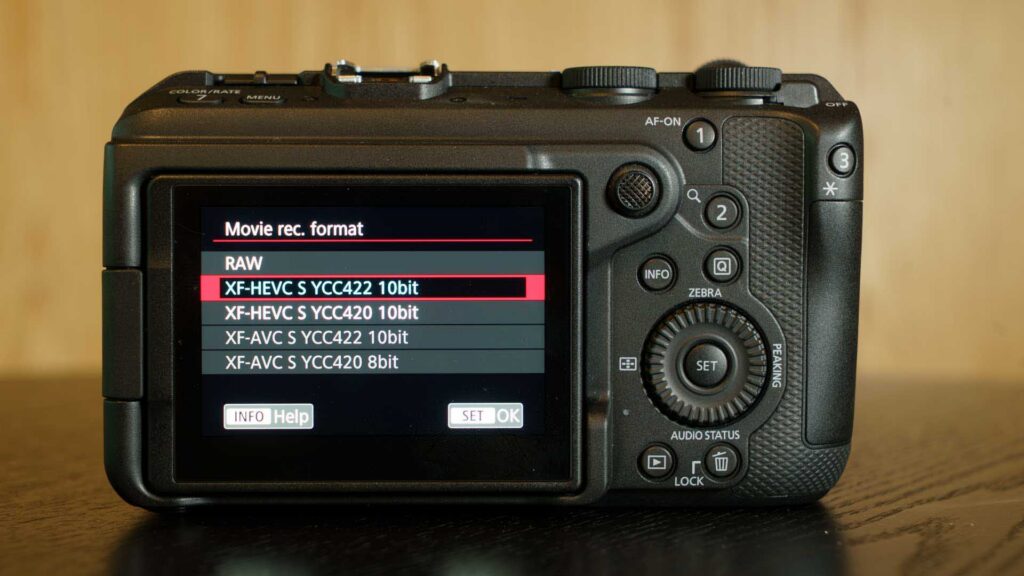
The headline feature is clearly the video specification as the EOS R6 V can record 7K RAW at up to 60p, oversampled 4K up to 60p and 4K at up to 120fps for slow-motion footage.
Open-gate recording is a major attraction because it captures the full sensor area in a 3:2 aspect ratio. This allows creators to crop horizontal, vertical and square content from the same clip during editing. For anyone regularly producing content for YouTube, Instagram Reels, TikTok and websites at the same time, this could be genuinely useful rather than just another buzzword feature. I think this is one of the EOS R6 V’s strongest features because it reflects the reality of modern content creation. Most creators are no longer producing content for just one platform.
Proxy recording is available too, allowing smaller files to be recorded alongside the main footage for easier editing workflows.
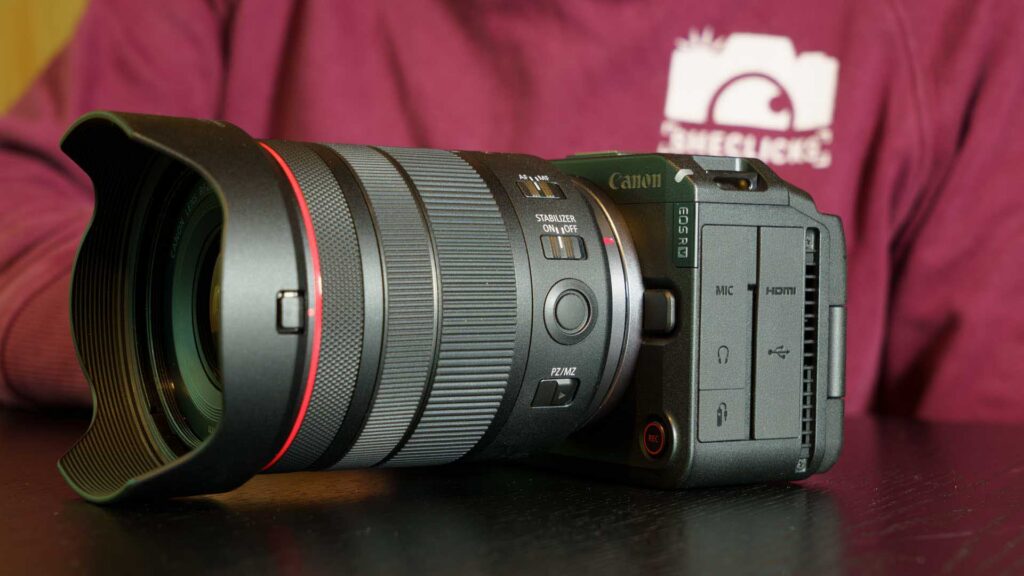
The EOS R6 V also supports waveform monitoring, false colour, zebras and four-channel audio recording. While it does not offer 32-bit float audio, Canon’s approach with four-channel recording enables creators to use multiple audio sources or backup channels at the same time.
Furthermore, the connectivity is strong, with full-size HDMI, USB-C webcam support up to 4K 60p, WiFi, FTP and FTPS support, plus compatibility with Canon Camera Connect and Content Transfer Professional.
The EOS R6 V looks different from Canon’s more traditional EOS R cameras. It resembles a smaller, slimmer Cinema EOS camera crossed with the EOS R50 V, with a flatter body shape and a strong emphasis on video handling. Naturally, there’s no viewfinder hump.
At 598g body only or 688g with battery and card, the R6 V feels lighter than it looks and it’s lighter than the EOS R6 Mark III (609g body only, 699g with battery and CFexpress memory card). It also feels intentionally designed for handheld use, with a solid, beefy grip.
That lower weight matters more than you might think, especially for creators filming handheld for long periods or carrying a camera around all day while travelling or shooting events.
The body is weather-sealed and constructed from magnesium alloy, aluminium alloy and polycarbonate resin, with Canon claiming weather resistance comparable to the EOS R6 Mark III.
There is no viewfinder, which likely cause consternation amongst photographers. However, I can understand Canon’s reasoning because this camera is clearly primarily intended for video, and most video shooters only use the screen on the back of the cameras. That said, photographers moving across from more traditional EOS cameras may miss having a viewfinder.
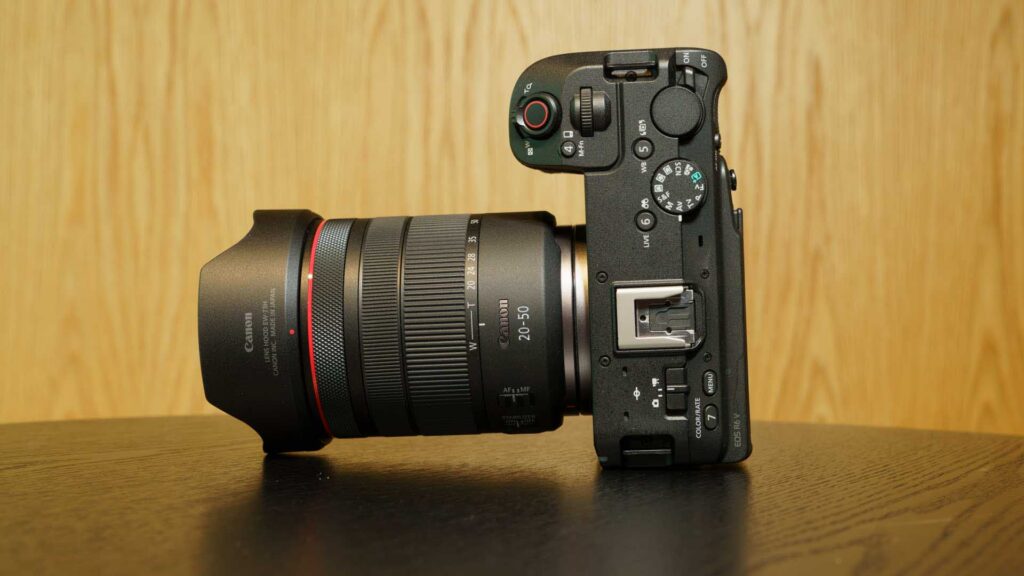
The vari-angle screen has 1.62 million dots and works alongside a vertical shooting interface that rotates automatically when filming vertically. Combined with the vertical tripod socket, the EOS R6 V feels genuinely optimised for social content creation rather than simply adapted for it.
Read our Canon EOS R5 II Review
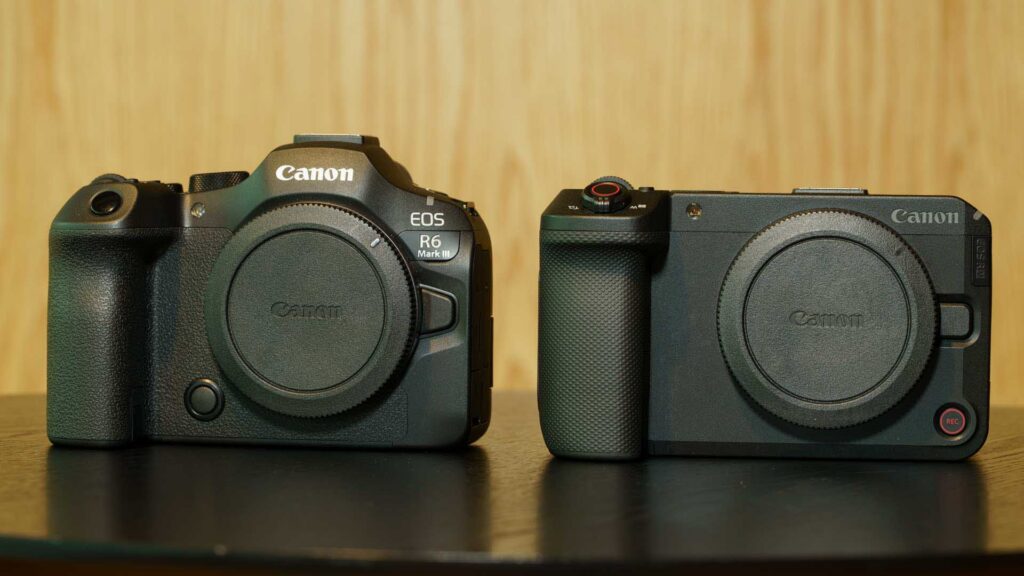
One of the nicest touches is the front record button. It sounds simple, but when filming yourself or working alone, having an accessible front-facing record button makes a real difference.
There are also 12 customisable buttons, vents for active cooling and a zoom lever beside the shutter button. The zoom lever works with compatible power zoom lenses like the new Canon RF 20-50MM F4L IS USM PZ power zoom lens announced at the same time.
Canon has also included a dedicated COLOR button for quick access to picture profiles and colour settings. This feels like a sensible addition for creators who switch regularly between Canon Log 2, Canon Log 3 and more standard colour profiles depending on the project.
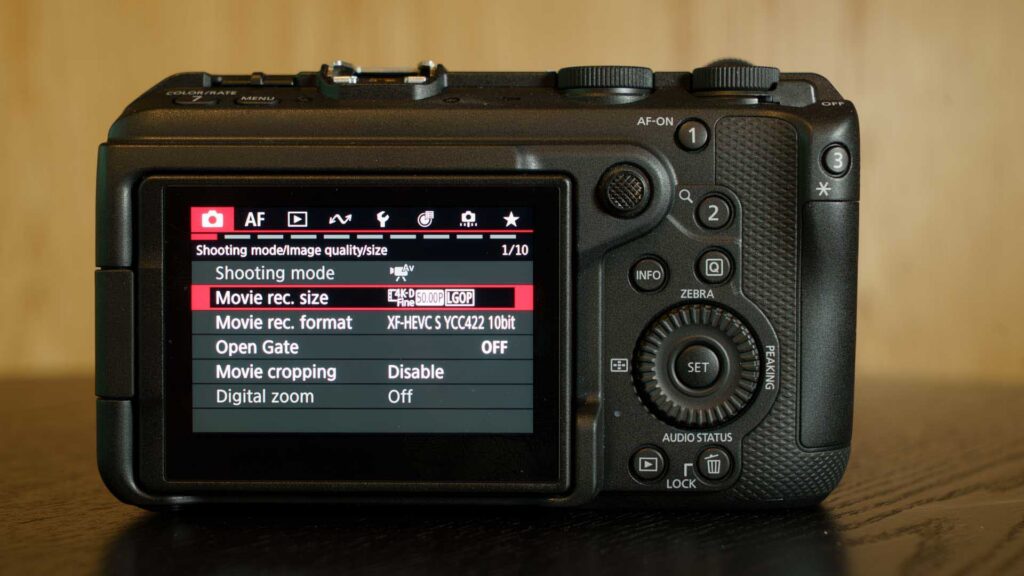
Canon’s interface is one of the EOS R6 V’s biggest strengths. Unlike Cinema EOS cameras, which can feel intimidating for newer filmmakers, the EOS R6 V keeps the familiar EOS menu system and straightforward operation.
The EOS R6 V also includes a dedicated Photo/Movie switch, making it easy to move quickly between shooting stills and video without diving into menus. That sounds like a small detail, but when you’re shooting hybrid content for clients or social media, those little workflow improvements matter.
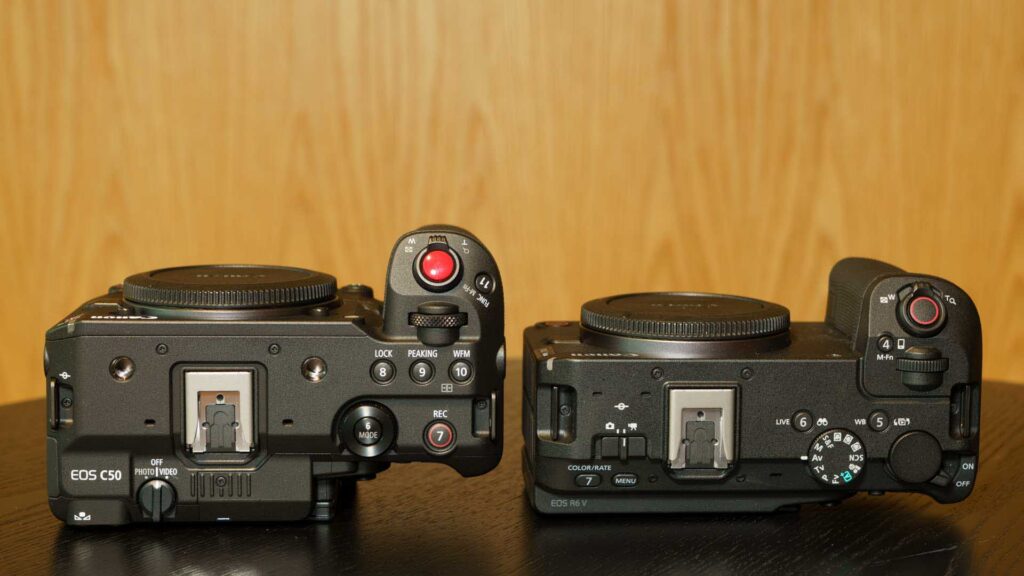
Although I need much more hands-on testing time with a final production camera before delivering a fully-scored review, the EOS R6 V looks extremely capable and the design choices make sense in practice.
I’ve used a beta sample of the camera and the autofocus system performed well with the limited range of subjects I was able to test it against. The Dual Pixel CMOS AF II system includes subject recognition for humans, animals and vehicles, with eye, face, head and body detection. Register People Priority allows up to ten people to be registered so the camera can prioritise them during shooting. That should make solo shooting considerably easier.
The in-body image stabilisation (IBIS) is rated at up to 7.5 stops, which is especially important for handheld filmmaking. Canon clearly sees this camera as a tool for creators who may not want to carry gimbals or heavy rigs all the time.
Importantly, the EOS R6 V has a built-in cooling fan. Canon says this helps the camera record 7K 60p RAW footage continuously for as long as storage allows, removing one of the major frustrations many creators have experienced with compact hybrid cameras.
The image quality also promises to be good. My 4K-D Fine footage looks excellent. Canon’s oversampled 4K modes help deliver excellent detail and reduced noise, while the full-frame sensor helps create the shallow depth of field many creators want for a more cinematic look.
Importantly, Canon seems to understand that creators increasingly need to deliver content across multiple platforms at once. Open gate recording combined with the native vertical workflow could make the EOS R6 V particularly attractive to women running their own creative businesses or content channels, where efficiency matters just as much as image quality.
The EOS R6 V also feels designed to reduce technical barriers. The simplified EOS interface, direct access colour controls and practical handling make it look much less intimidating than a Cinema EOS camera, while still offering many of the tools serious creators need.
These images were shot using a beta sample of the Canon EOS R6 V and the final image quality may vary.



The Canon EOS R6 V feels like Canon paying attention to how creators actually work in 2026 rather than simply adapting a photography camera for video.
There are more powerful cinema cameras and there are more photography-focused hybrids, but the Canon EOS R6 V occupies an interesting middle ground. It offers genuinely advanced video features without the complexity and intimidation that can come with professional cinema systems.
For women who create content independently, especially those balancing photography, video, social media and business work, the EOS R6 V could prove particularly appealing. It is small enough to carry comfortably, straightforward enough to learn quickly and capable enough to grow with more ambitious projects.
I also think Canon has judged the balance quite well between capability and usability. There are cameras with even more advanced video tools, but many creators simply want something reliable, portable and straightforward that still delivers excellent quality. The EOS R6 V looks like it could fit that role very nicely.
The combination of 7K open-gate recording, strong stabilisation, active cooling, clever vertical shooting features and Canon’s reliable autofocus system makes this look like one of Canon’s most creator-focused cameras yet.
I need to spend more time shooting with a final production sample before delivering a final score, but the Canon EOS R6 V already feels like a thoughtful and very modern hybrid camera.