
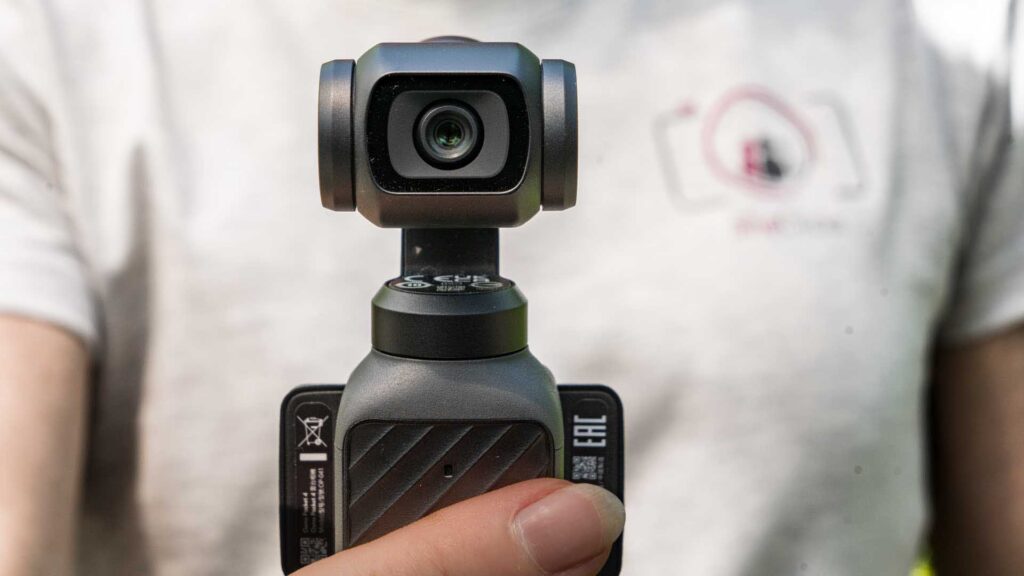
The DJI Osmo Pocket 4 combines excellent image quality with impressive stabilisation and reliable subject tracking in an incredibly compact package. Photography with a mirrorless camera remains my main focus, but when I want to capture video content on the fly, whether that’s a travel vlog, a quick piece to camera or an interview, I want something that’s simple, dependable and doesn’t require me to carry a larger video setup. The Pocket 4 proved exactly that. While neutral density (ND) filters are an essential extra for filming in bright sunshine, the footage retains enough dynamic range to recover highlights successfully.
The DJI Osmo Pocket 4 is a pocket-sized three-axis mechanically stabilised camera designed for content creators, vloggers and photographers who want high-quality video without carrying bulky equipment. It features a 1-inch sensor and combines advanced stabilisation with intelligent subject tracking to make capturing smooth footage extremely straightforward.
Small enough to slip into a jacket pocket or handbag, it is aimed at creators who want professional-looking results without the complexity of larger cameras or gimbals. It also makes a very appealing companion for photographers who primarily shoot stills with a mirrorless or DSLR camera and want a straightforward way to create vlogs, interviews and behind-the-scenes video content.
The DJI Osmo Pocket 4 is available in several configurations including:
The DJI Osmo Pocket 4 went on sale on 22nd April 2026.
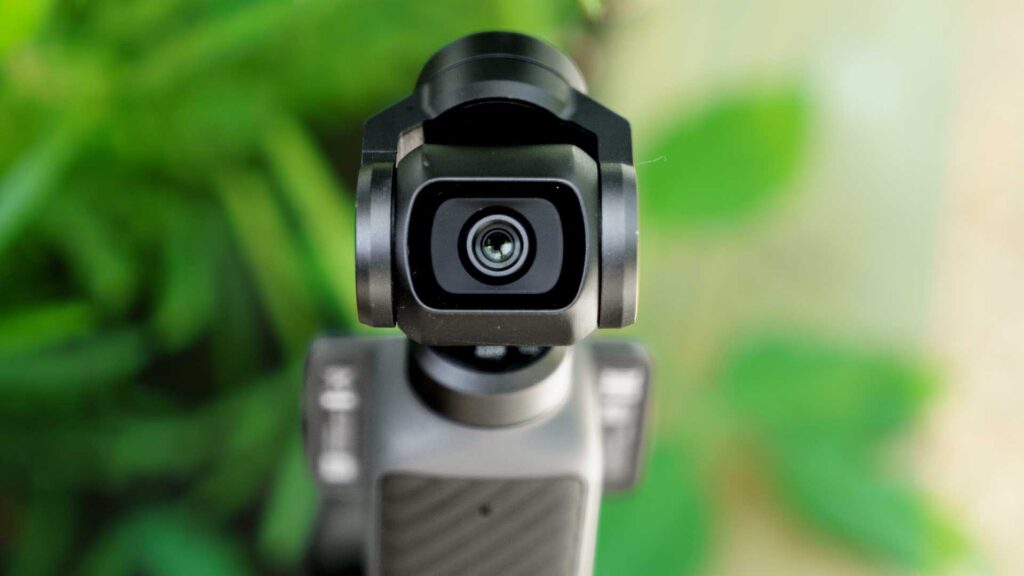
At the heart of the DJI Pocket 4 is a 1-inch sensor paired with an f/2 aperture lens. The camera can record 4K video at up to 240fps, enabling dramatic slow-motion footage.
The Pocket 4 camera supports 10-bit D-Log recording and DJI claims it can capture up to 14 stops of dynamic range, giving plenty of latitude for colour grading and tonal adjustment. There’s also ActiveTrack 7.0 to keep subjects in the frame, while Intelligent AutoFocus is designed to maintain accurate focus.
There are several intelligent shooting modes available. Spotlight Follow automatically prioritises the selected subject, while Dynamic Framing set the camera to follow the subject but allows it to be positioned in the frame according to compositional guides such as the rule of thirds. Meanwhile, SpinShot mode rotates the camera through 90 or 180 degrees to create a cinematic effect.
Gesture control is another useful feature if you plan to film yourself. Showing an open palm activates or deactivates ActiveTrack, while making a V sign starts or stops recording or takes a photograph.
DJI has provided 107GB of built-in memory, which is enough for many vlogging situations and means you can start filming without immediately reaching for a memory card. There’s also a microSD card slot for additional capacity, giving users the best of both worlds. A USB-C port and transfer speeds of up to 800MB/s make moving clips to a computer quick and straightforward.
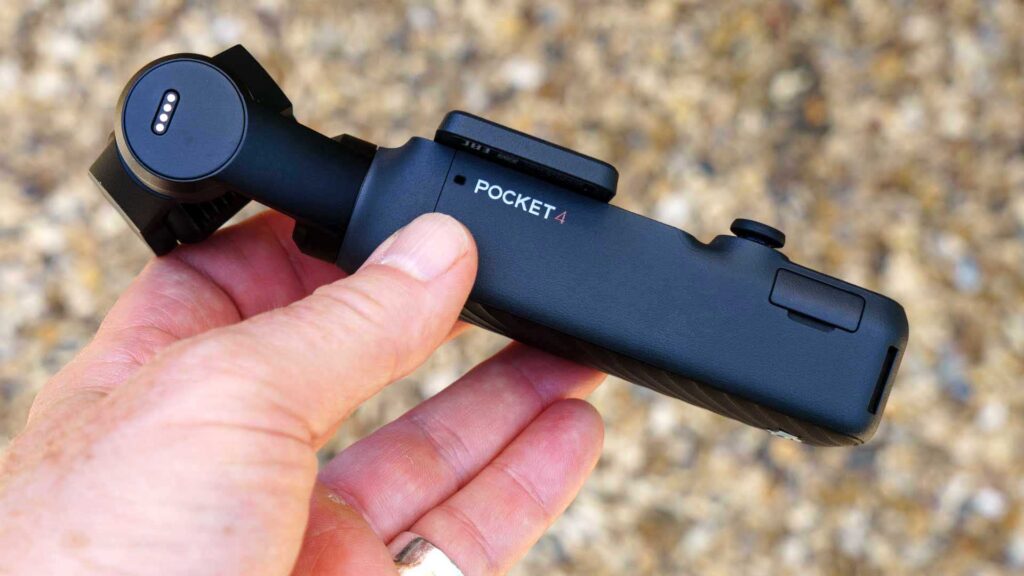
Audio is another area in which the Pocket 4 impresses. It supports two DJI wireless microphone transmitters simultaneously and can create a backup recording using its built-in microphones. This backup audio can be saved separately or embedded within the video file, which gives extra reassurance when recording interviews or important pieces to camera.
Battery life is impressive. Charging from empty to 80% takes around 18 minutes, while a full charge enables up to four hours of recording at 1080p and 24fps.
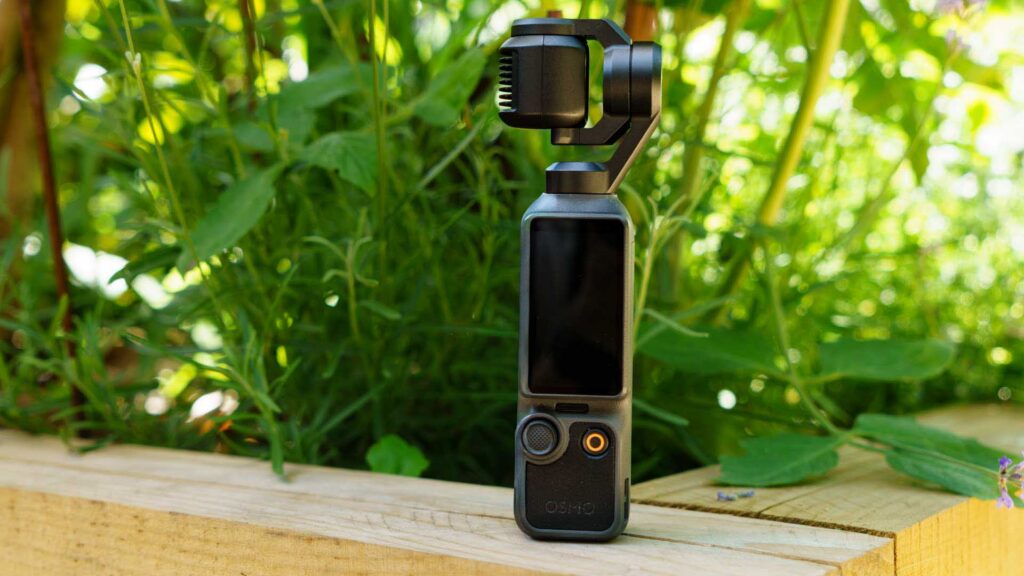
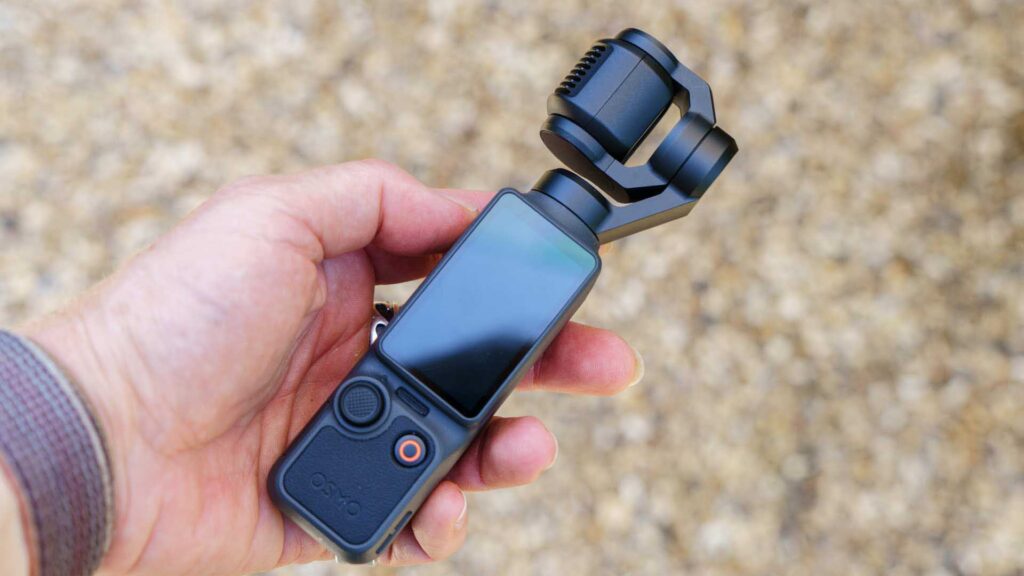
While it’s a little bigger than its predecessor, DJI Osmo Pocket 4 is incredibly compact and lightweight. It slips easily into a pocket and is small enough to carry all day without noticing it. However, it’s advisable to fit the gimbal clamp to keep this essential moving part safe.
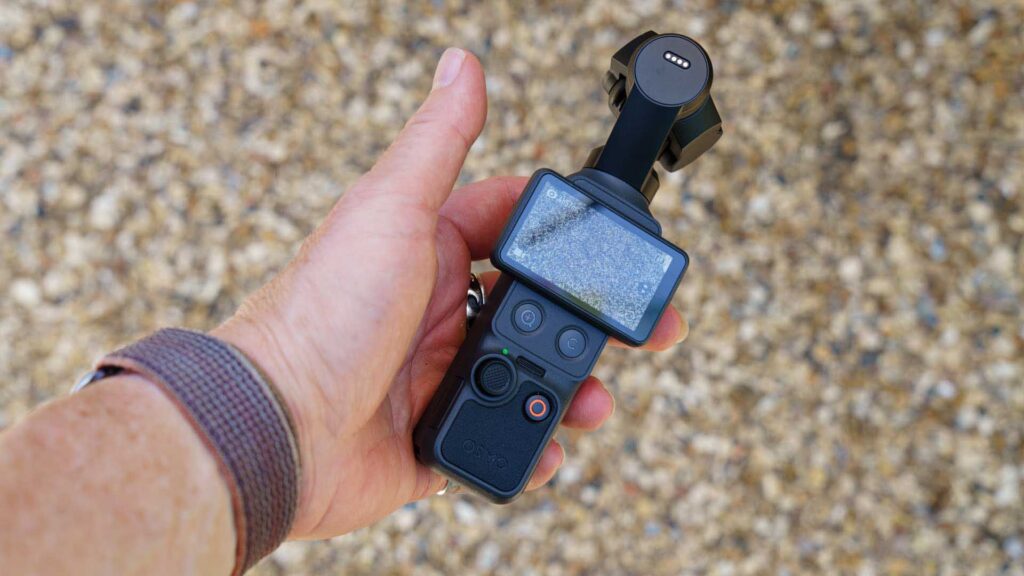
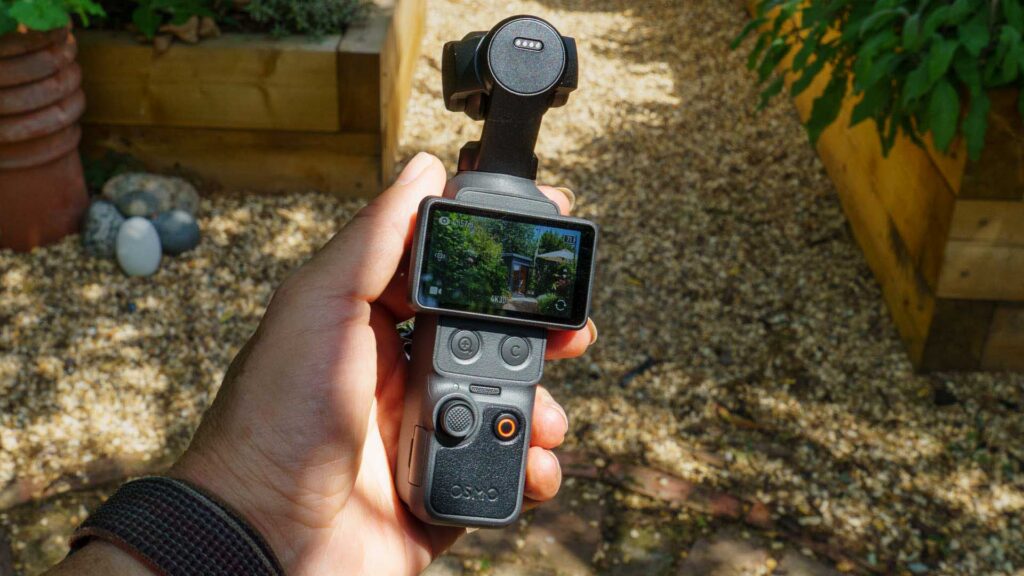
One of the things I appreciate most about the camera is how straightforward it is to use. Rotating the touchscreen powers the camera on and, if you want, can automatically start recording using the previous settings. It makes capturing spontaneous moments incredibly quick and simple.
Below the screen, there are dedicated Zoom and Custom buttons, alongside a five-direction joystick. The joystick can control either the gimbal movement or the zoom, and a double press recentres the gimbal. Three presses rotate the camera between forward and selfie positions, which is handy when switching between filming yourself and your surroundings.
Read our Review of the DJI Mic Mini 2
The touchscreen interface is intuitive. Swiping up accesses recording settings, swiping left reveals image and audio controls, swiping down opens the control centre and swiping right takes you to playback. After only a short time, navigating the menus becomes second nature.
As someone whose primary interest is photography, I appreciate a camera that doesn’t require lots of accessories or a complicated setup when I want to create video content. The Pocket 4 is genuinely approachable and can be operated comfortably with one hand.
Thoughtful little touches such as the lanyard attachment and the customisable button make the Pocket 4 feel like a well-considered design rather than simply a tiny camera on a stick.
During testing, the DJI Osmo Pocket 4 consistently produced superb results. Image quality is excellent, with attractive colours and plenty of detail. The 1-inch sensor copes well with high contrast scenes and provides enough latitude to recover highlights when required.
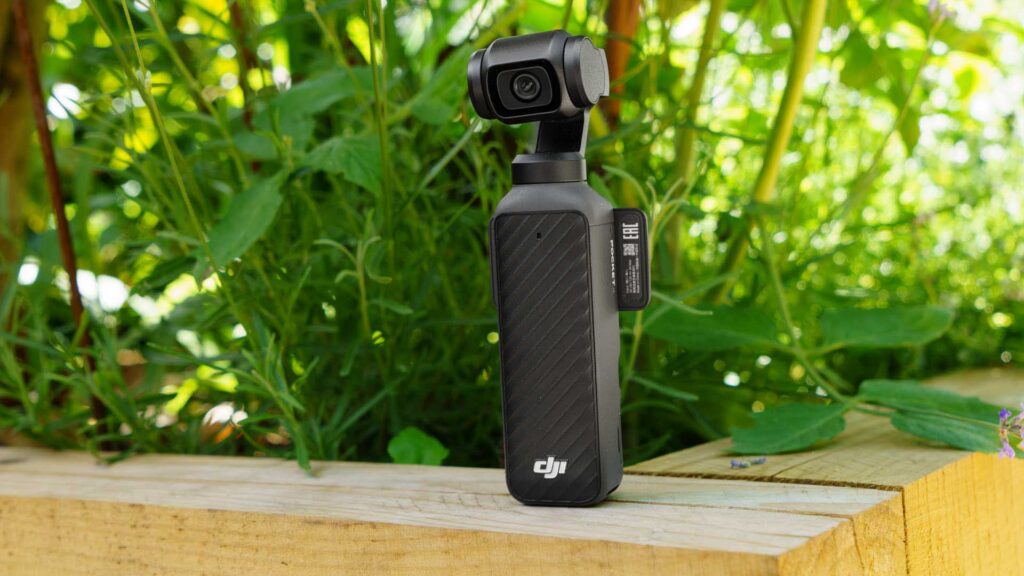
The integrated three-axis gimbal does an excellent job of keeping footage stable while walking and the overall build quality feels reassuringly solid despite the tiny dimensions. Four built-in microphones help capture immersive sound while the quick-release and accessory contacts make attaching accessories straightforward.
While filming in the bright sunshine of Valencia, I didn’t have any neutral density filters available – they aren’t supplied in any of the kits. Consequently, some footage looked overexposed straight from the camera. Fortunately, the highlights weren’t clipped and I was able to pull them back during editing to create perfectly acceptable footage. That’s a testament to the camera’s dynamic range.
The slow-motion footage is especially impressive. Because it uses higher frame rates and correspondingly faster shutter speeds, it coped with the bright conditions extremely well and looks great straight from the camera. Any movement is rendered very smoothly, and it translates well to regular footage if don’y want the slow-mo effect for the whole clip.
Another standout feature is the subject tracking. ActiveTrack proved very useful and consistently kept subjects framed accurately. It works remarkably well and makes solo filming much easier. However, if you’re filming a scene with people walking through the frame, you may want to turn it off as the camera can follow someone when you’d rather it stay still.
I also used the Pocket 4 for a couple of interviews paired with the DJI Mic Mini 2 wireless microphone kit and they proved to be a dependable combination. The audio quality is very good, richer than with the Pocket 4 alone, and I could concentrate on the conversation rather than worrying about technical issues. This setup would suit creators producing interviews, podcasts or social media content.
The low-light performance is also impressive. The larger sensor and wide aperture help retain natural colours and detail after sunset or indoors.
The video below combines a short section of me holding the camera as I walk and talk, and an interview with Sophia Spurgin. I used the DJI Mic Mini 2 to record the audio, with each of us wearing a transmitter/mic. The audio is untreated.
I shot the video below in Valencia while Janina Wilde and I were planning a workshop there for next year. The video mixes slow-mo footage shot at 240fps, some of which is played back at 2x and 4x speed to give 2x slow-mo and regular speed rather than 4x slow-mo. The clips to camera again use the DJI Mic Mini 2 wireless mic system to record speech, and the audio is straight from the camera.
This video interview again used the DJI Mic Mini 2 to record the audio, however, it was recorded in a very noisy environment and I used Riverside.FM’s Magic Audio feature to enhance the speech and quieten the ambient sound.
SheClickers can follow this link to find out more about the workshop in Valencia
The DJI Pocket 4 is a great choice of camera for events like this when you can’t carry a lot of kit and you only have a short amount of time with people.
Read about Jo Kearney Winning the World Food Photography Awards 2026
The DJI Osmo Pocket 4 makes video creation feel effortless. It delivers excellent image quality, impressive stabilisation and genuinely useful tracking features in a body that fits in a pocket.
As a photographer, my main priority is stills photography, but when I need to create video content, whether that’s for a vlog, an interview or behind-the-scenes footage, I often want a camera that’s quick and easy to use. The Pocket 4 excels in that role. It proved equally capable when capturing travel footage in Valencia and recording interviews with the DJI Mic Mini 2 system.
Neutral density filters are an essential extra for filming in bright sunshine, but the footage has enough flexibility to recover highlights successfully. Meanwhile, the superb slow-motion recording and dependable tracking make it an appealing option for creators who want professional-looking results without carrying a larger video setup.
The DJI Osmo Pocket 4 is an excellent all-round performer for travel, vlogging, behind-the-scenes clips and interviews. Its combination of image quality, ease of use and portability makes it one of the most enjoyable and useful cameras I’ve used for video creation.