
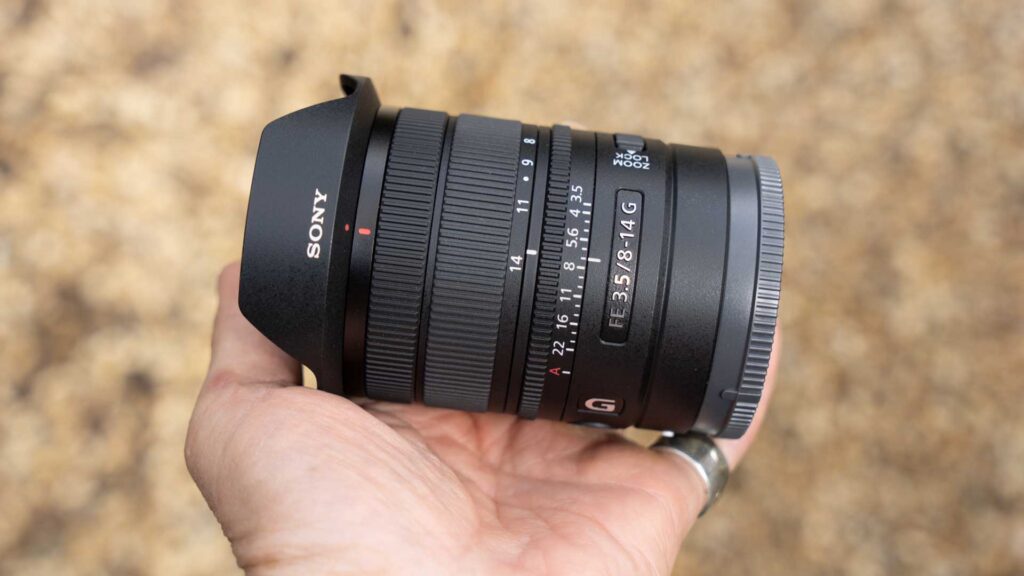
The Sony FE 8-14mm F3.5 Fisheye G is Sony’s first fisheye lens and the fact that it’s a zoom gives it more creative scope than most. It can produce a circular fisheye view at the wide end before transitioning to a diagonal fisheye image at 14mm.
The Sony lens produces sharp, clean images and its autofocusing is fast and decisive. There’s some chromatic aberration around the edge of the image circle at the shortest focal lengths, but the images themselves are pretty clean. It’s a specialist lens, but its compact build and two distinct fisheye effects make it more versatile than you might expect.
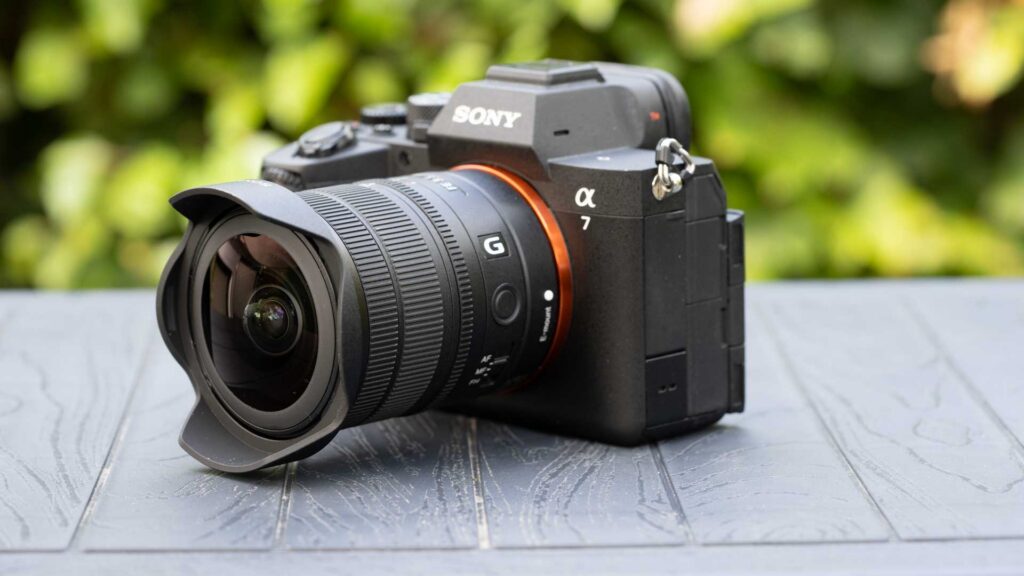
The Sony FE 8-14mm F3.5 Fisheye G is a full-frame fisheye zoom lens for Sony E-mount cameras and it’s Sony’s first fisheye lens. It can also be used on an APS-C format Sony camera, where its focal length gives the same field of view as a 12-21mm lens on a full-frame camera.
A fisheye is a rather different proposition from an ordinary wide-angle lens. It takes in a huge amount of the scene, but rather than trying to keep straight lines straight, it allows them to bend dramatically. That distortion is part of the appeal and gives fisheye images their immediately recognisable look.
Most fisheyes have a fixed focal length and therefore one particular version of that effect. The Sony FE 8-14mm F3.5 Fisheye G is more interesting because its zoom range lets you vary it.
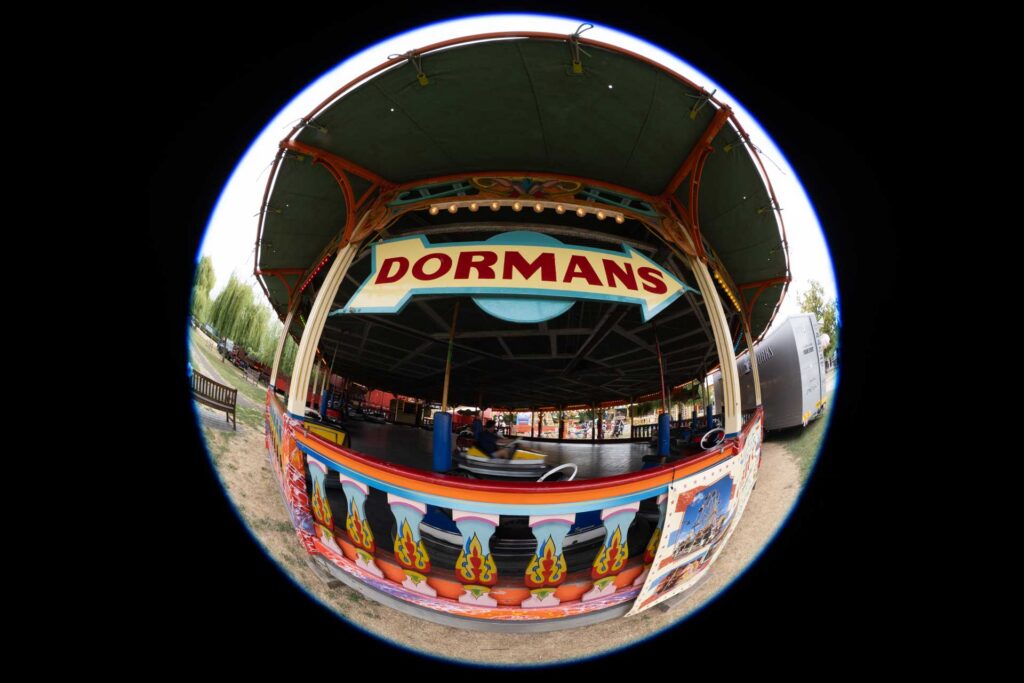
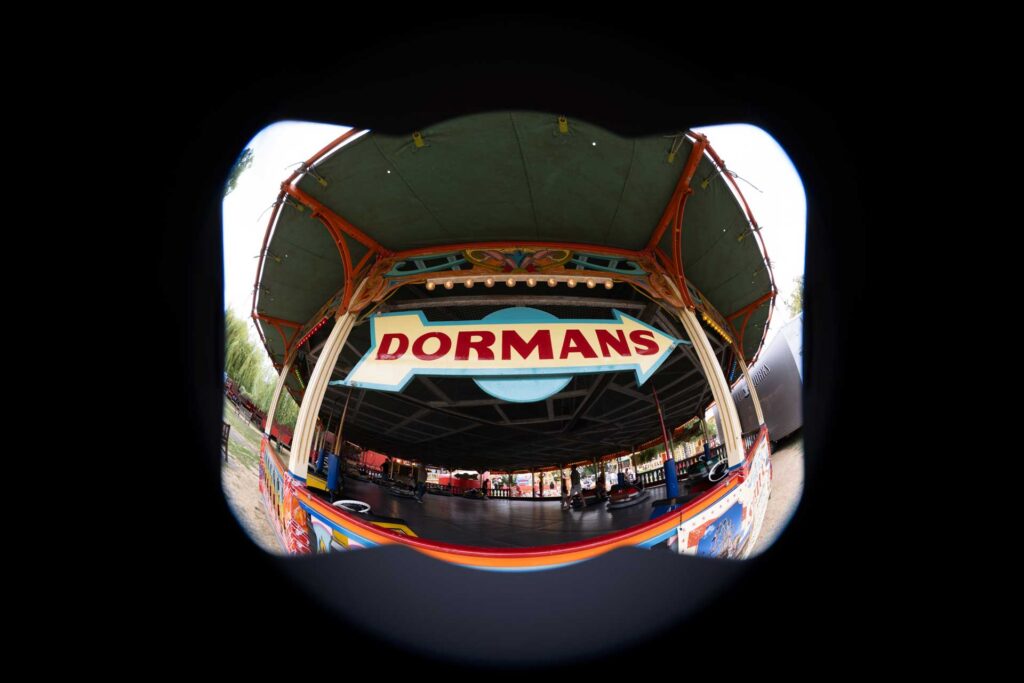
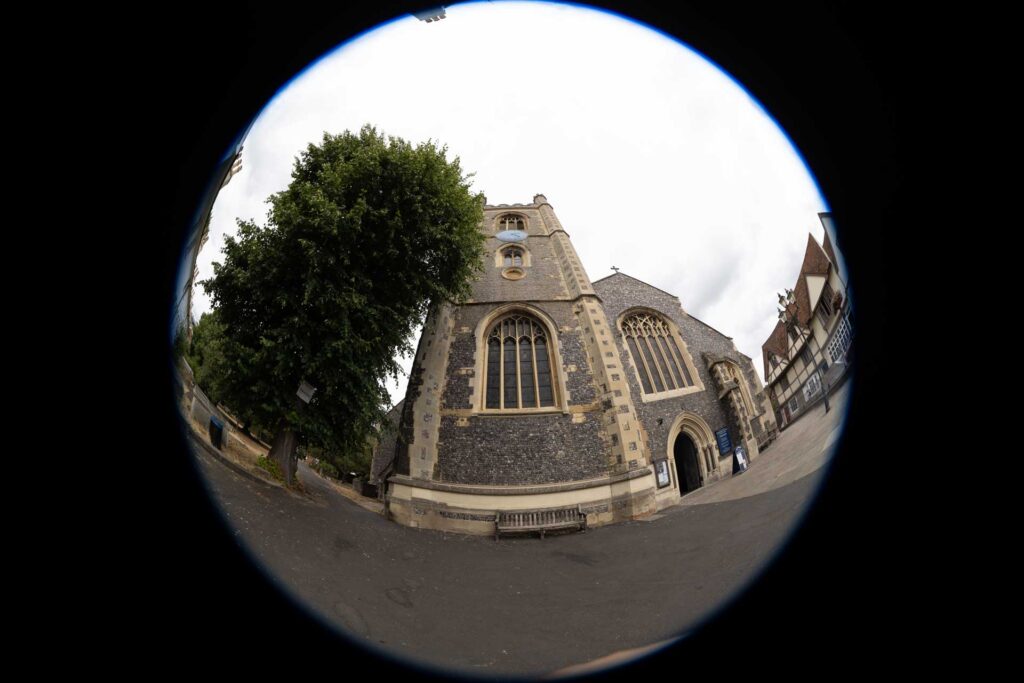
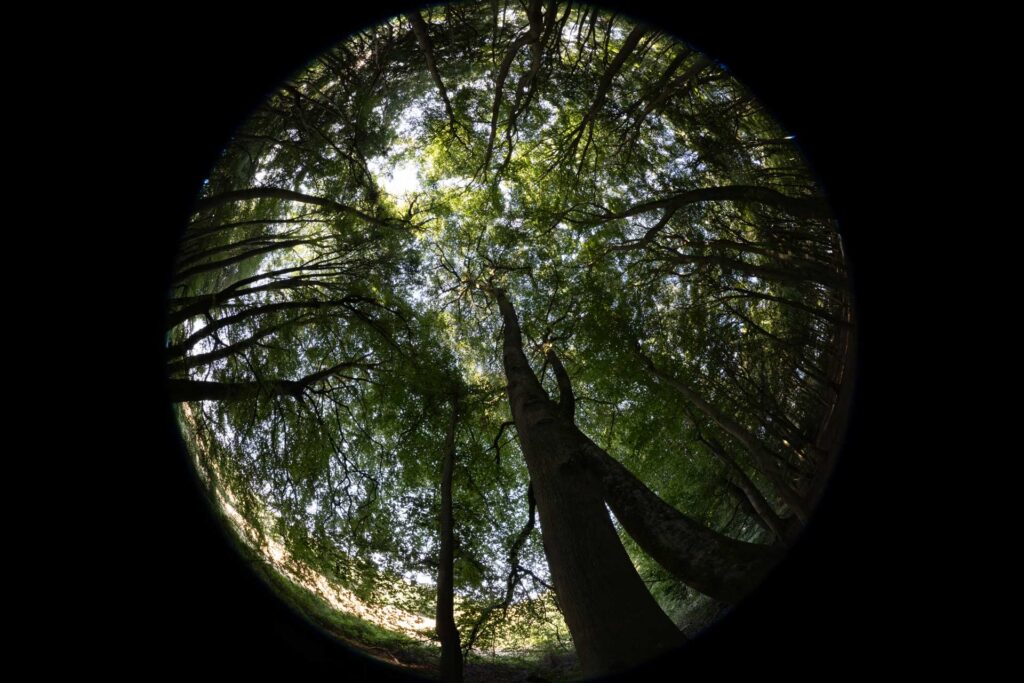
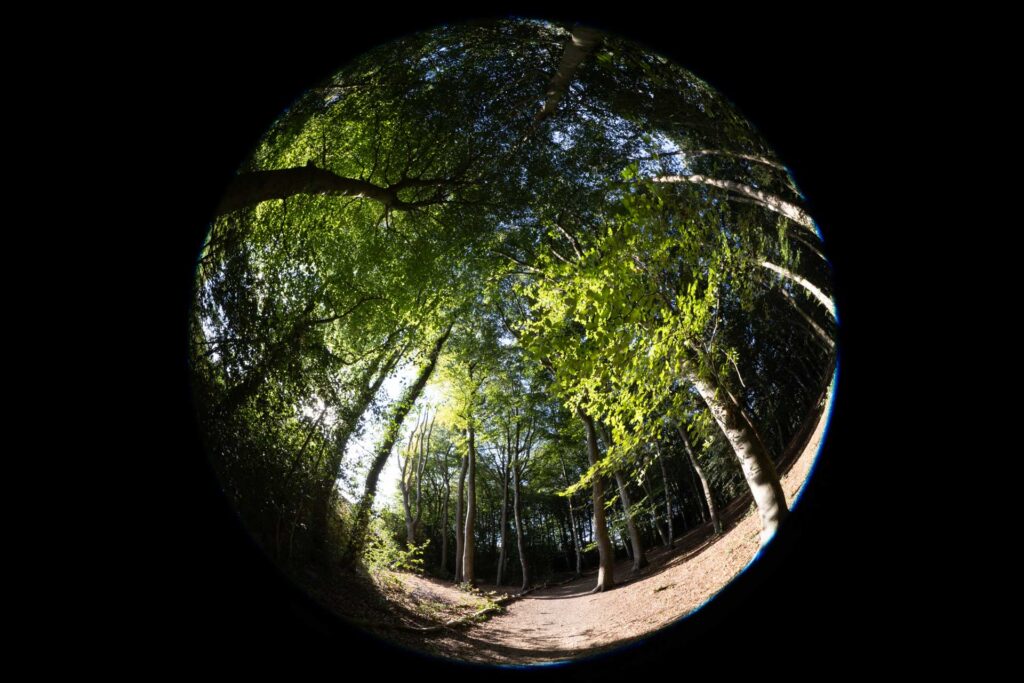
At the 8mm end on a full-frame camera, you get the classic circular fisheye effect, with a 180-degree view contained within a circle and black surrounding it. As you zoom towards 14mm, the image circle gets larger until, at 14mm, the image fills the rectangular frame. This is what’s known as a diagonal fisheye because the 180-degree angle of view is measured diagonally across the frame.
In practical terms, the circular image is the more unusual and obviously fisheye of the two, while the 14mm setting keeps the sweeping curves and exaggerated perspective but produces a more conventional rectangular photograph. Being able to move between them gives you more scope to match the effect to the subject.
There are also intermediate focal lengths, of course, so you don’t have to think of the lens simply as having an 8mm and a 14mm setting. You can zoom until the image circle and framing look right for what you’re photographing.
That makes the Sony FE 8-14mm F3.5 Fisheye G quite a bit more flexible than a typical fisheye prime.
I can see it appealing to photographers who shoot elaborate interiors, architecture, action sports, gigs, festivals and crowd scenes. It’s also fun for anything a little quirky. You can photograph people with it, although anyone who is sensitive about the size of their nose may not thank you for getting too close.
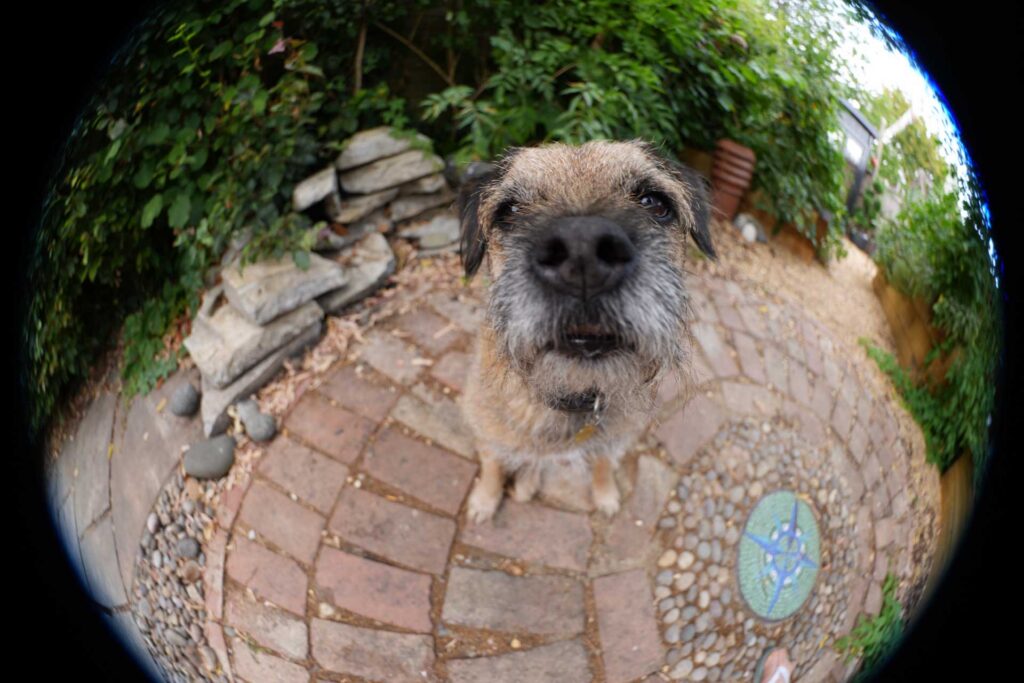
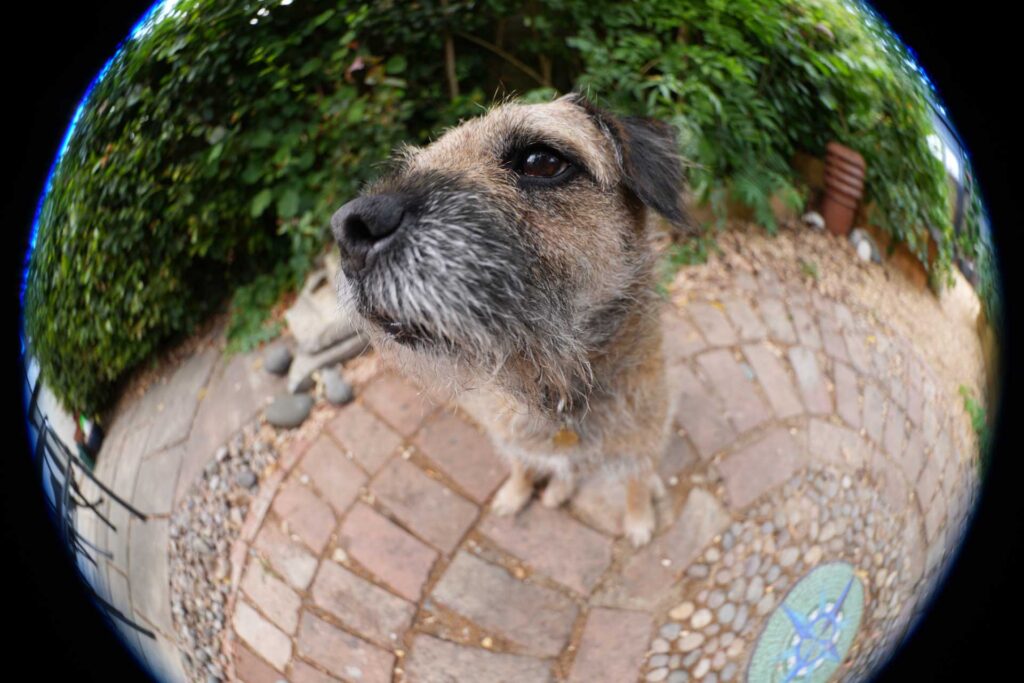
Pets are another obvious subject. A fisheye pushed close to a curious dog or cat can produce entertaining results, especially when the nose fills the foreground and everything else seems to fall away behind it.
Sony is also targeting video and professional Virtual Reality (VR) production with the lens. Its extremely wide view makes fisheyes useful for immersive capture, while the zoom, focus-locking controls and compact body have been designed with more complex VR rigs in mind.
Sony announced the FE 8-14mm F3.5 Fisheye G on 8th September 2026, with a recommended price is GBP £1,500 / EUR €1,700. Its on-sale date still has to be confirmed, so I’ll update this review when that information is available.
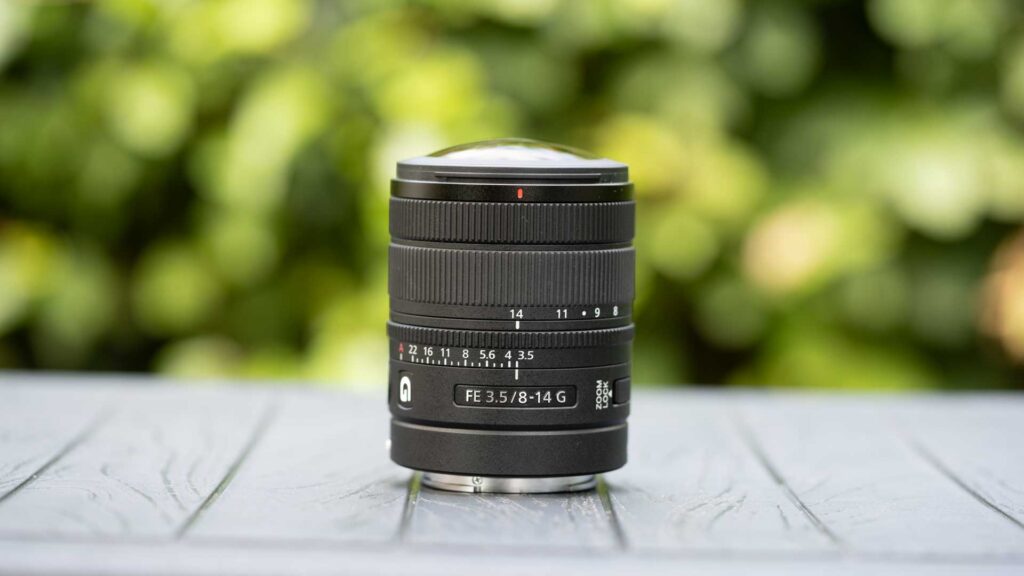
Naturally, the defining feature of the Sony FE 8-14mm F3.5 Fisheye G is its 8-14mm focal length range. That’s unusually flexible for a fisheye and it allows the lens to move from a circular fisheye view towards a full-frame diagonal fisheye image as you zoom.
Sony has also included a zoom lock that can hold the lens at three useful positions. One is for the full-frame circular fisheye setting at the wide end, one is for the full-frame diagonal fisheye view at 14mm and the third is an intermediate position intended for creating a diagonal fisheye image with an APS-C format image area.
That might initially sound rather specialised, but it’s actually quite sensible. With such an extreme lens, a fairly small movement of the zoom ring makes a very noticeable difference to the image. If you’ve found exactly the framing you want, being able to lock the zoom prevents it being changed accidentally.
The lens has a constant maximum aperture of f/3.5 and the aperture can be closed down to f/22. There’s a seven blade circular diaphragm and a dedicated aperture ring on the barrel.
Sony has also provided an aperture click switch. With the clicks engaged, the ring gives clear tactile feedback as you change the setting, which is useful for stills photography. Videographers can disengage the clicks for smooth, silent adjustments while recording.
Inside, Sony uses specialist optical elements to maintain resolution across the enormous field of view and help control optical problems such as chromatic aberration. The zoom and focusing mechanisms are internal, so the barrel doesn’t extend when you change focal length or focus distance.
The minimum focusing distance is 0.15m throughout the zoom range, while the maximum magnification ratio is 0.22x. A fisheye isn’t the obvious choice for close-up photography, but getting very close to a subject with such an extreme angle of view can produce some of its most interesting images. The nearest part of the subject becomes dramatically exaggerated while the surroundings seem to race away into the distance. It’s one of those situations where the specification has a very obvious creative consequence.
Sony uses linear motors for the focusing. The autofocus system is also designed to work with the subject detection and tracking systems in compatible Sony cameras and Sony says the lens can keep up with high-speed shooting on cameras such as the Alpha 9 III.
There’s Linear Response manual focusing as well, which makes rotation of the focus ring produce a predictable change in focus distance. That’s useful when you’re setting focus manually or want to repeat a focus movement.
Unusually, the focus mode switch has three positions rather than just AF and MF. The third is FH for Focus Hold.
After setting the focus manually, switching to FH holds that focus position to help prevent it being knocked accidentally. Sony highlights this for VR shooting, where two cameras and lenses may need to remain precisely matched, but I can also see it being useful for astrophotography or any situation where you’ve carefully set the focus and don’t want it to change.
There’s also a focus hold button on the barrel which can be customised through the camera’s menu.
The Sony FE 8-14mm F3.5 Fisheye G can’t take ordinary screw-in filters on the front because of the bulbous front element. Instead, Sony has built a sheet filter holder into the rear of the lens and supplies a cutting template to help trim filters to the correct shape.
That’s a sensible solution. The front element is so strongly curved that putting a normal filter in front of it would be impractical and would risk appearing in that extraordinarily wide field of view.
The lens also has dust- and moisture-resistant construction and the front element has a fluorine coating to help repel water, oil and dirt.
Sony says focus breathing is kept to a minimum too. That’s useful for video because it reduces the change in framing that can otherwise occur as the focus moves between near and distant subjects.
Sony is also making a point of the lens’ potential for professional VR production. A pair of the lenses can be used with Sony’s VENICE Extension System to give a 64mm interpupillary distance, mimicking the spacing between human eyes and helping to produce a more natural stereoscopic view.
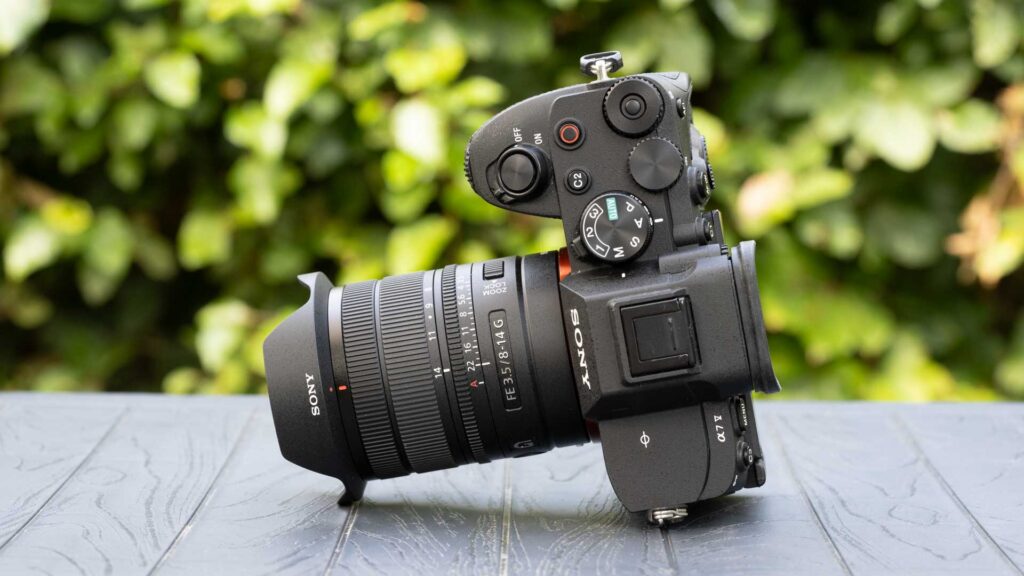
The first thing that struck me about the Sony FE 8-14mm F3.5 Fisheye G is how compact and slender it is for a fisheye zoom. If it weren’t for the curved front element, there wouldn’t be much from a distance to suggest quite how unusual its view is.
The lens is 76.5mm in diameter, 109.4mm long and 476g. That makes it small enough to be a realistic addition to a camera bag rather than something that needs a special decision every time you go out.
That’s significant because fisheye lenses are specialist optics. You don’t generally head out expecting every photograph to be taken with one and there may be days when you only find one or two subjects that work with the effect. Consequently, the easier a fisheye is to carry, the more likely it is to make it into your bag in the first place.
Weight and bulk don’t exist in isolation. They affect the bag I choose, what else I take with me and how comfortable I am after several hours of carrying my kit. Thankfully, the Sony FE 8-14mm F3.5 Fisheye G is compact enough that I wouldn’t be reluctant to put it in my bag on the chance that I might find a good use for it. That matters with a creative lens because you can’t use it if you’ve left it at home.
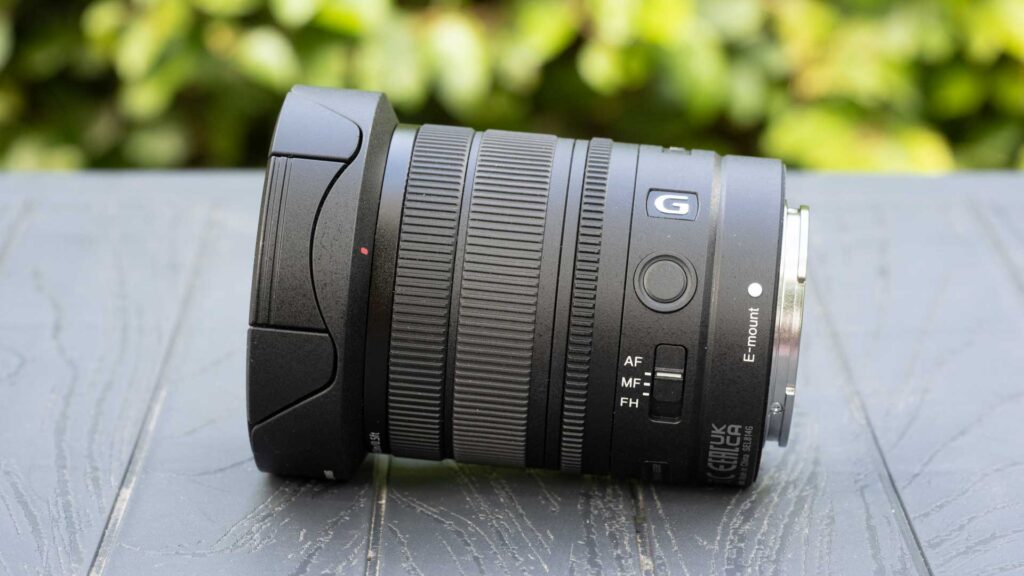
The control layout is also more comprehensive than you might expect from such a compact lens. There are separate focus, zoom and aperture rings, which means the main adjustments can be made directly on the lens rather than through the camera.
I like having a physical aperture ring. It makes it easy to see and adjust the setting without having to think about which camera dial is assigned to aperture control.
The click switch for the aperture ring is positioned on the side of the barrel, while the AF, MF and FH focus switch is on the opposite side alongside the focus hold button.
The zoom lock is another useful control. With an ordinary zoom, a very small movement may not matter much. With a fisheye, it can fundamentally change the way the image circle sits within the frame, so locking the focal length makes more sense.
This feature is especially relevant for the VR users Sony has in mind. With a conventional two-camera setup, the cameras and lenses need to be carefully aligned and a shift in focal length or focus can upset that arrangement.
The zoom lock, Focus Hold setting and other controls are intended to allow a VR rig to be prepared and its settings secured before it is moved into position. This reduces the need to tape rings in place to prevent accidental changes. That’s a niche application, but I don’t think the controls feel niche when you’re using the lens for normal photography. They’re simply handy ways to stop important settings changing accidentally.
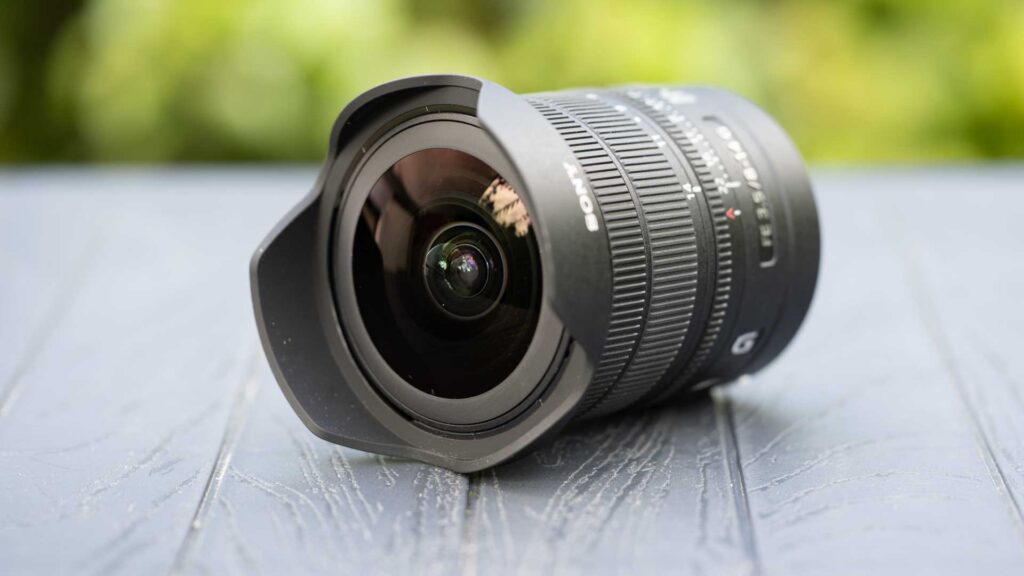
Sony supplies a petal-type hood that doubles as a means of holding the front lens cap in place – in fact, you can’t use the cap without it. However, there’s a significant catch. The hood can only really stay attached when you’re shooting at 14mm. At wider focal lengths it appears in the image because the lens sees such a huge area.
That also leads to another practical consideration. Your own feet are remarkably easy to include. Tip the camera down even a little and suddenly your shoes are part of the composition. It’s amusing the first time, but it also teaches you very quickly to scan the entire frame rather than concentrating solely on the main subject.
That’s really the key to handling a fisheye. It’s not difficult to operate, but you have to learn to look differently.
With a conventional lens, I naturally look at what’s happening around my subject. With the Sony FE 8-14mm F3.5 Fisheye G, you need to think much more about the whole frame because the lens is seeing things that would normally be well outside your composition.
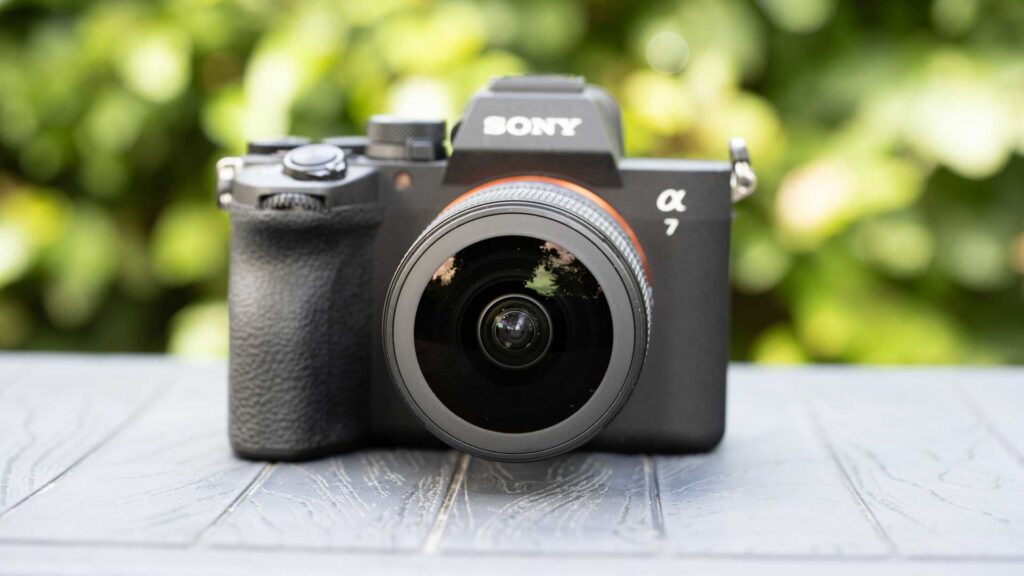
The Sony FE 8-14mm F3.5 Fisheye G produces sharp images, but a fisheye isn’t really a lens that I’d judge primarily by looking at resolution charts. The effect is more important.
You buy a lens like this because you want the exaggerated perspective, the huge field of view and the sweeping curves. It needs to produce good image quality, of course, but a technically perfect fisheye image of the wrong subject is still going to be less interesting than a slightly imperfect one where everything comes together.
Fortunately, the Sony FE 8-14mm F3.5 Fisheye G produces sharp, clean-looking results.
The level of detail is good across the image and there’s no sense that you’re giving up image quality simply to get the unusual perspective.
At the shortest focal lengths I can see some chromatic aberration around the outer edge of the image circle, but the image itself is pretty clean. In other words, coloured fringing isn’t something that regularly draws my attention when I’m looking at the photographs.
That’s an important distinction because the aberration is concentrated around the boundary of the image circle rather than being an obvious issue across the actual picture.
Flare is another thing that’s difficult to avoid completely with a lens this wide. When the field of view is enormous, a bright light source can enter the frame surprisingly easily. Nevertheless, the Sony FE 8-14mm F3.5 Fisheye G keeps flare under control pretty well. It’s something to be aware of rather than something that spoils the lens.
And then, of course, there’s distortion.
Curvilinear distortion is fundamental to the fisheye look. Straight lines bow dramatically as they move away from the centre of the image and the effect becomes increasingly obvious towards the edges.
It would be pointless to criticise the Sony FE 8-14mm F3.5 Fisheye G for that. It’s exactly what it’s designed to do. What matters more is learning to use those curves as part of the composition.
If you place a strong straight line through the centre of the image, it can remain comparatively normal while everything around it bends. Shift that line towards an edge and it becomes much more dramatically curved. Similarly, moving the horizon up or down in the frame makes a huge difference to its shape. A fisheye really encourages you to move the camera around and experiment rather than taking the first composition that comes to mind.
The zoom makes this more interesting because you can also change how much of the fisheye effect is visible within the rectangular frame.
At 8mm, the circular image immediately tells you that you’re looking at something unusual. It’s a very strong treatment and I wouldn’t want to use it for everything, but with the right subject it can be great fun. Zooming towards 14mm gives you a progressively larger image until the frame is filled at the diagonal fisheye setting.
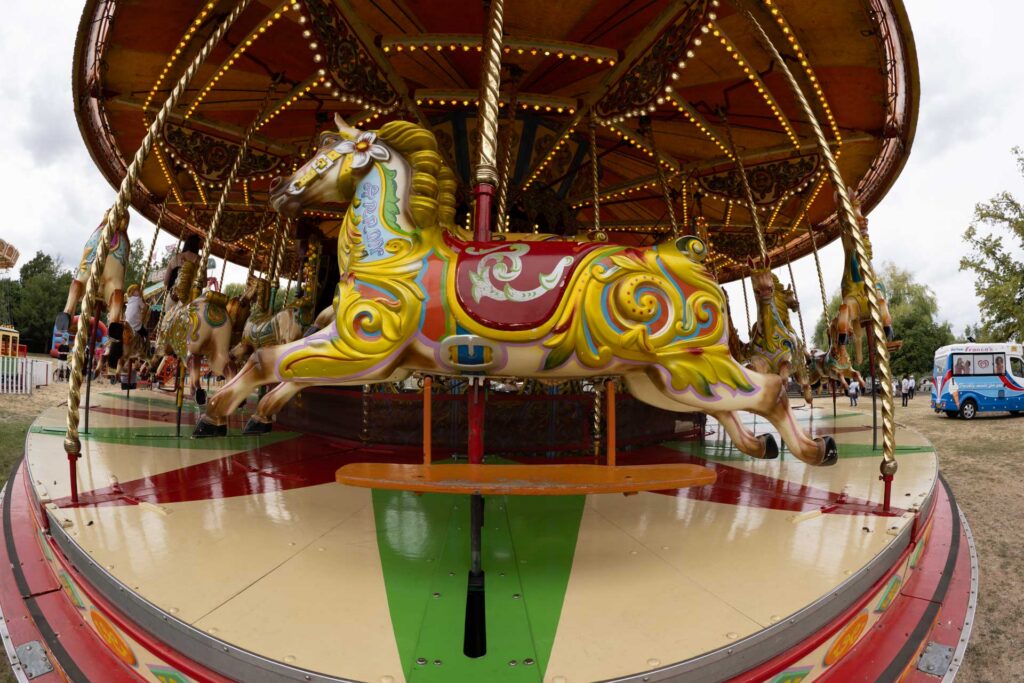
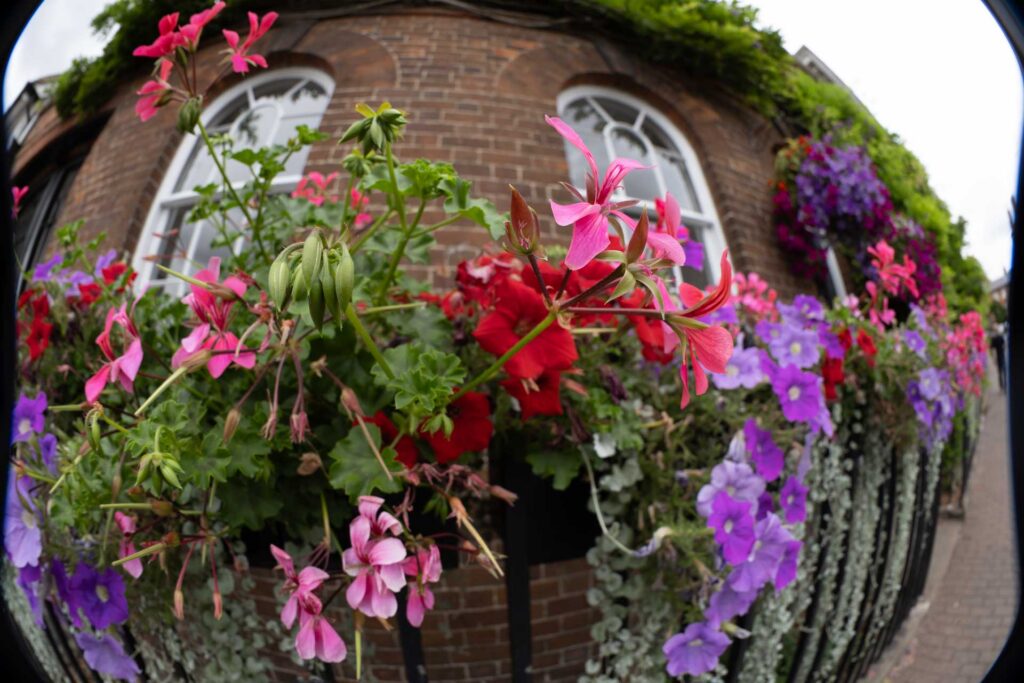
I suspect the 14mm end would be the more frequently used option for many photographers because the result is easier to mix with images made using conventional lenses. You still get all the dramatic bending and an extraordinarily wide view, but without the black surround of the circular image. Having both options makes the Sony FE 8-14mm F3.5 Fisheye G more useful than a typical fisheye prime.
The key to using this lens is finding the right subjects. Elaborate interiors are an obvious choice. A fisheye can take in huge ceilings, decorative details and surrounding architecture in a way that even a conventional ultra-wide-angle lens struggles to match. It also works well when the distortion complements the shapes already in the scene. Curved staircases, domes, tunnels and arches are the sort of subjects I’d look for because the fisheye treatment can emphasise their form rather than just making them look bent.
Crowds are another good option. At a gig or festival, getting close and using the Sony FE 8-14mm F3.5 Fisheye G can put the viewer right in the middle of what’s happening. Instead of isolating one performer with a long lens, you can include the stage, crowd and venue in a single image.
There’s a long association between fisheye lenses and action sports for the same reason. Skateboarding, cycling and other fast-moving subjects can work particularly well when the photographer is able to get close.
The 0.15m minimum focusing distance adds another dimension because you can place something very close to the lens and exaggerate it against an enormous background. That’s also why the lens can be fun for pets and portraits when you’re deliberately going for something unusual. I wouldn’t use it for a conventional flattering portrait, but that’s not the point. If somebody is happy to play along, the exaggerated perspective can produce something much more entertaining.
The Sony lens’ autofocusing is fast and decisive. It also works with the subject detection systems in compatible Sony cameras, which means you can concentrate more on the framing and timing. That’s particularly welcome with a fisheye because there is already plenty happening within the composition. Having the camera and lens take care of focusing reliably leaves you free to pay attention to all those edges and curves.
Some fisheye lenses are manual focus only, so the autofocus system is a useful practical advantage.
To be fair, the enormous depth of field you often get with an 8-14mm lens means focusing isn’t always especially challenging. However, it becomes more important when you’re working close to a subject and using f/3.5. The close focusing is one of the Sony FE 8-14mm F3.5 Fisheye G’s more enjoyable characteristics because it lets you really exploit the perspective. Move close to something and it expands dramatically while the background seems to disappear into the distance. Moving the camera by a few centimetres can completely change the relationship between those elements. That’s one of the things that makes a fisheye interesting to use. It encourages you to look for compositions you wouldn’t even consider with a normal optic.
There’s no getting away from the fact that the fisheye treatment can become repetitive if it’s used for everything. Once you’ve seen a dozen circular fisheye images of similar subjects, the novelty starts to wear off. But that’s true of most strong photographic effects. The trick is knowing when to use it.
When the subject suits it, the Sony FE 8-14mm F3.5 Fisheye G creates images that simply aren’t possible with a conventional wide-angle lens.
These images were captured with the Sony FE 8-14mm F3.5 Fisheye G on the Sony A7R VI.

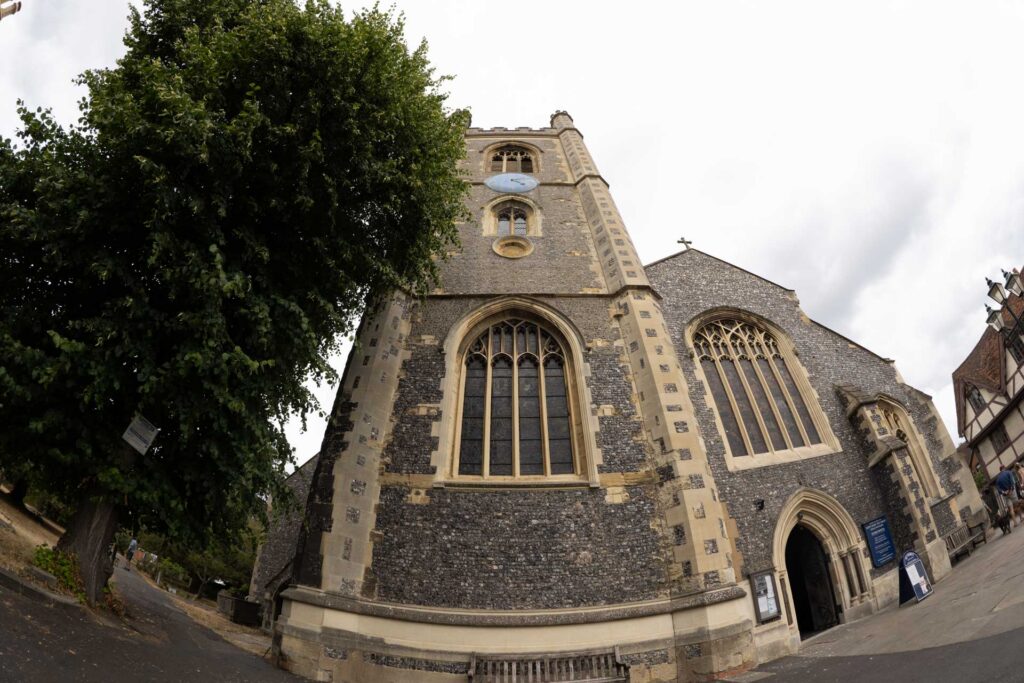
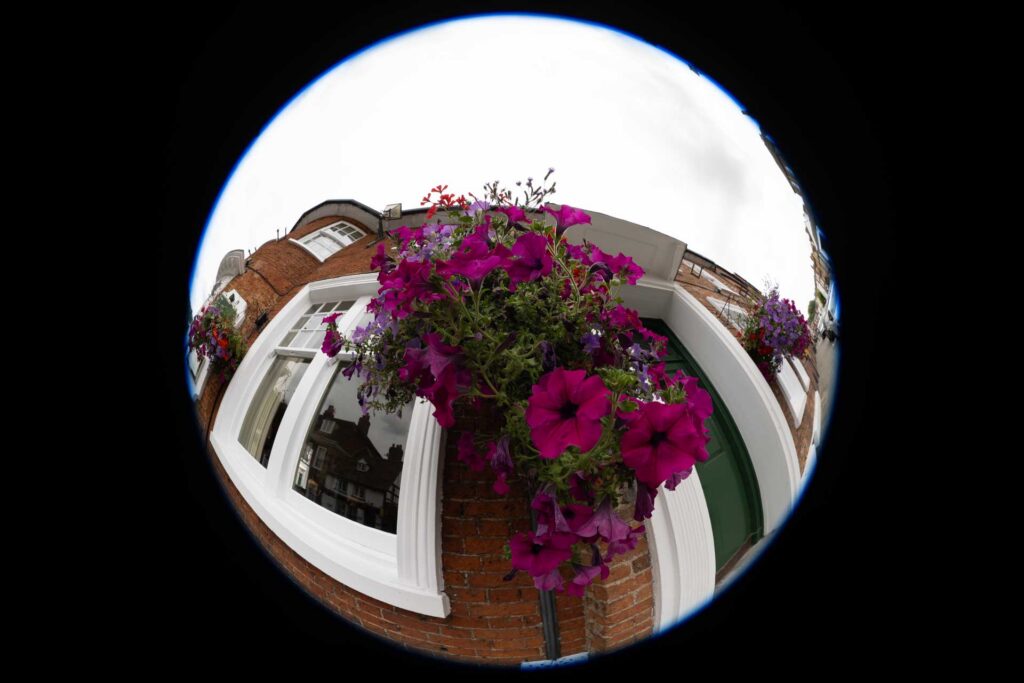
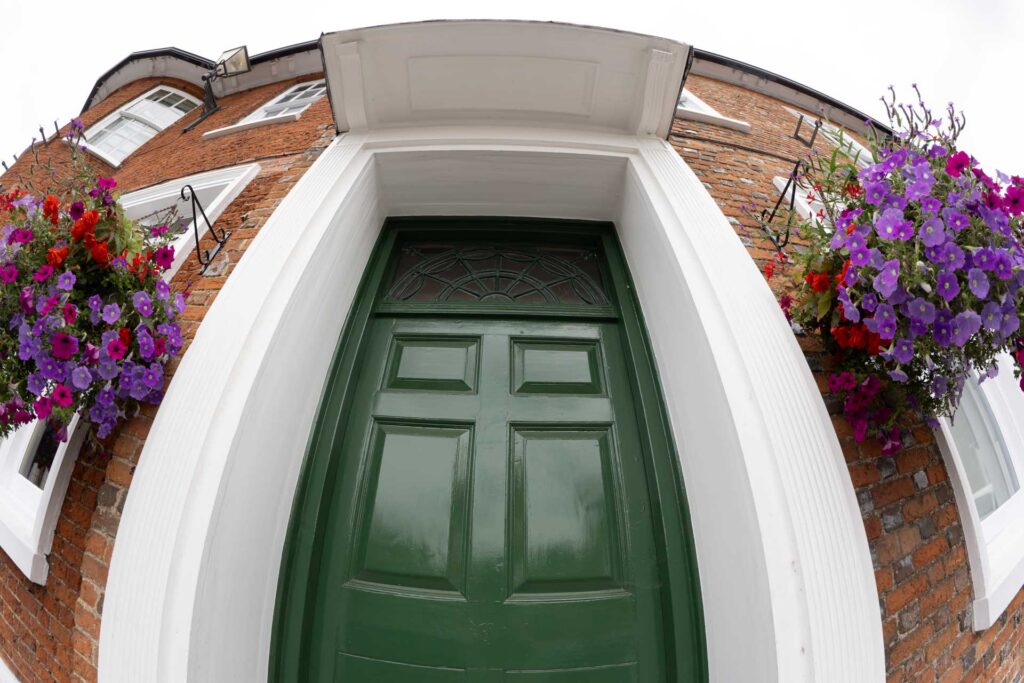
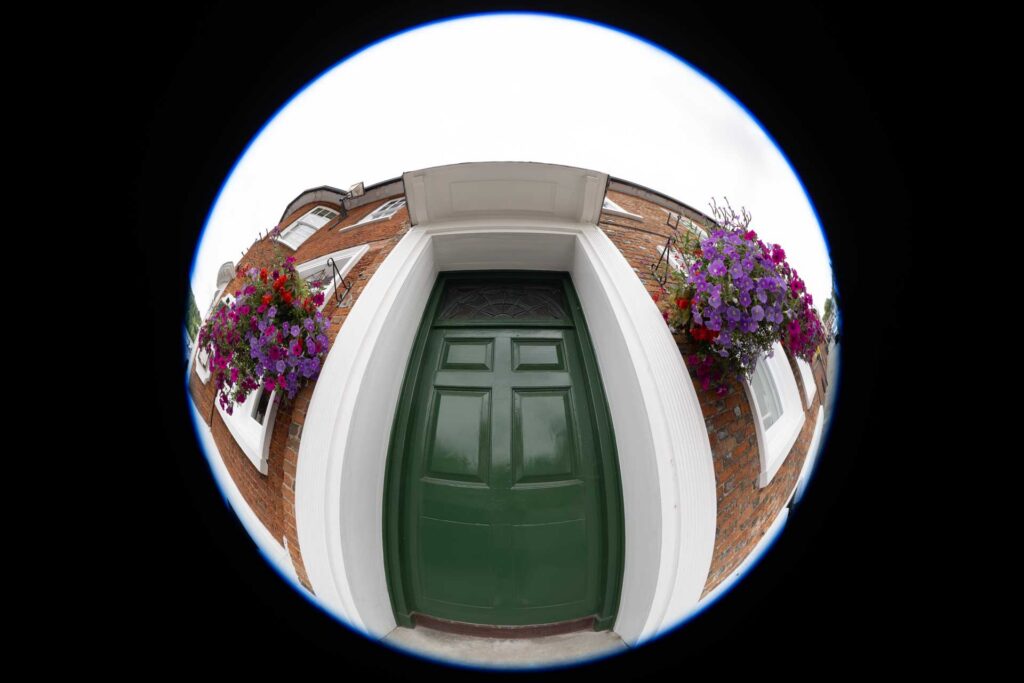

A fisheye lens isn’t for everyone. It gives such a distinctive view of the world that you need to like the effect and be prepared to look for subjects that suit it. However, if the idea floats your boat and you’re a Sony Alpha camera user, the Sony FE 8-14mm F3.5 Fisheye G is more versatile than most fisheyes because of its zoom range. Being able to move from a circular fisheye image at the wide end to a diagonal fisheye view at 14mm gives you more creative options and makes it easier to match the effect to the subject.
I also like the fact that Sony has treated it as a serious photographic tool rather than a novelty. The aperture ring, click switch, focus hold controls, zoom lock and rear filter holder all make sense, while the attention paid to VR shooting adds another dimension for specialist users.
For me, though, one of its biggest attractions is the compact build. A fisheye is never going to be the lens I reach for on every shoot, so I don’t want one that takes up too much room in my bag or feels like a burden to carry. The Sony FE 8-14mm F3.5 Fisheye G is small enough that I can see myself taking it along on the chance that the right subject presents itself.
As a female photographer, that matters because I’m always conscious of the overall weight of the kit I carry, particularly on a long day. A specialist lens is much more appealing when adding it to the bag doesn’t mean leaving something else useful behind.
The Sony FE 8-14mm F3.5 Fisheye G is still a niche lens, but it’s a creative one that encourages you to get close, change your viewpoint and look for compositions you wouldn’t consider with a conventional wide-angle optic.
The usual problem with a fisheye is that it’s a one-trick pony, but this particular pony has two tricks.