
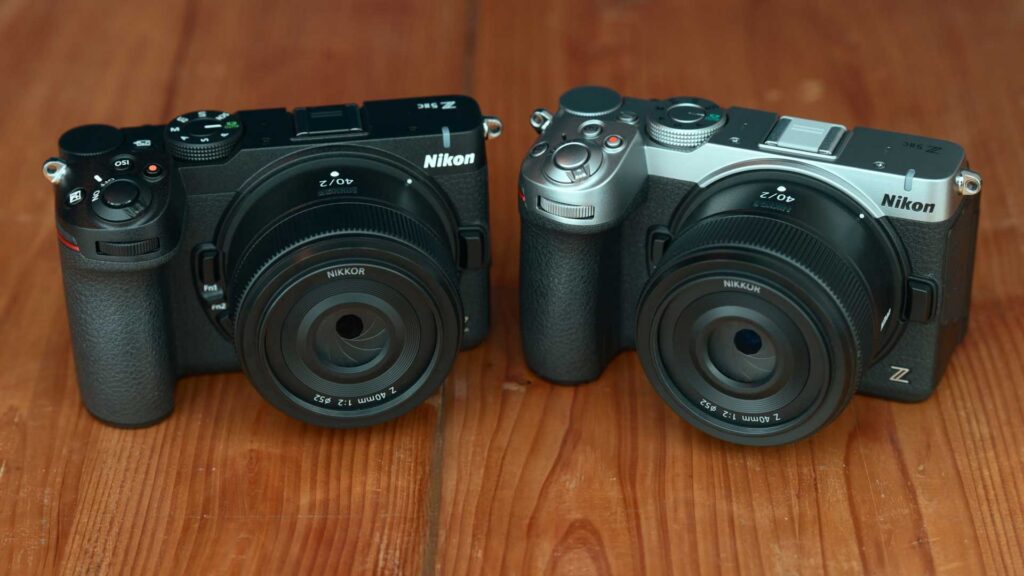
The Nikon Z5IIC is an interesting addition to Nikon’s full-frame mirrorless line-up, combining a 24.5MP sensor and EXPEED 7 processor with a compact, streamlined body. It also offers a strong feature set for its £1,349 body-only price, including intelligent subject detection, autofocus sensitivity down to -10EV, up to 7.5 stops of VR (Vibration Reduction), and continuous shooting at up to 14fps.
It’s important to note that this first-impressions review is based on information Nikon supplied at the UK press briefing. I haven’t yet got my hands on the Nikon Z5IIC, so I can’t comment from experience on its handling, autofocus performance, image quality or stabilisation. However, this isn’t an entirely new camera, it uses a lot of technology we have seen in other Nikon cameras, so I am able to draw some conclusions.
One of the biggest talking points about the Z5IIC is the lack of a viewfinder. Video shooters are often quite at home composing on a screen, but many photographers are likely to find not being able to put the camera to their eye a problem. That said, anyone coming to photography from a smartphone is less likely to be concerned by it.
As a female photographer, I’m also interested in the Z5IIC’s comparatively low body weight of around 537g. It looks like a camera that could be easy to carry for a day out or while travelling, and I’m looking forward to finding out how it feels in the hand.
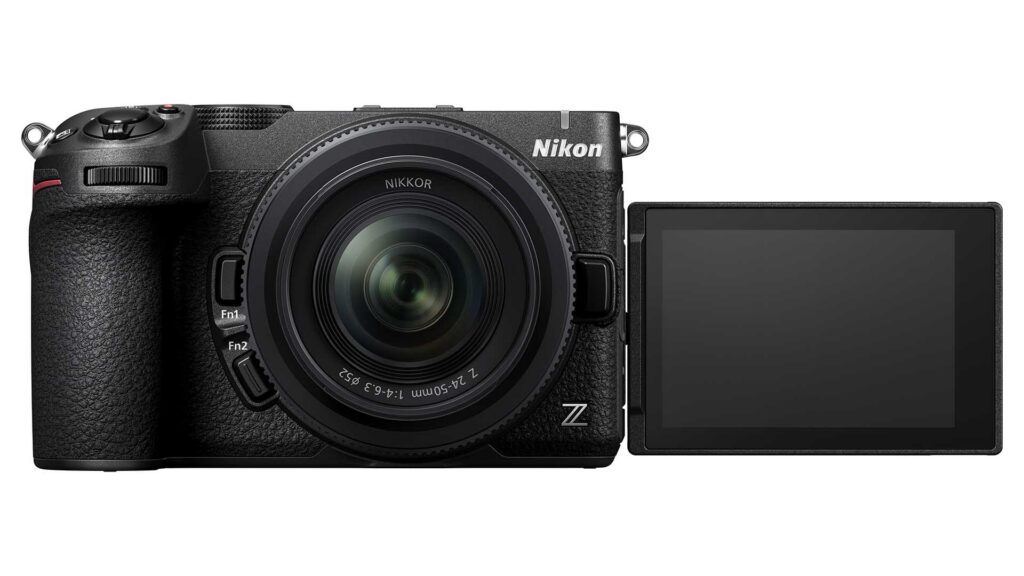
The Nikon Z5IIC is a 24.5MP full-frame mirrorless camera designed to make the move to full-frame photography straightforward without restricting photographers to a very basic specification. Although Nikon describes the Z5IIC as beginner-friendly, there’s quite a bit to interest more experienced photographers.
It has Nikon’s EXPEED 7 processing engine, 5-axis in-body image stabilisation, sophisticated subject recognition and continuous shooting at up to 14fps. Nikon has also included features intended to make it easier to get attractive results without extensive post-capture processing. There are 15 scene modes as well as Nikon Imaging Recipes and a Film Grain option.
The subject detection system recognises people, birds, dogs, cats, cars, bicycles, motorcycles, trains, aeroplanes and fish. Nikon says the Z5IIC is its first Z series camera able to recognise fish. That might make it popular with anglers, but hopefully, there will be an underwater housing made available at some point to take full advantage of this.
The Nikon Z5IIC was announced on 24 September 2026 and is due to go on sale in October 2026.
The Nikon Z5IIC price is £1,349 body only. There are three kit options: the most affordable is with the Nikkor Z 24-50mm lens for £1,609, while the most expensive includes the Nikkor Z 24-200mm for £2,049. The third kit comes with the Nikkor Z 24-70mm f/4 S for £1,879.
That gives photographers a relatively affordable route into Nikon’s full-frame Z system with plenty of scope to add different lenses as their interests develop.
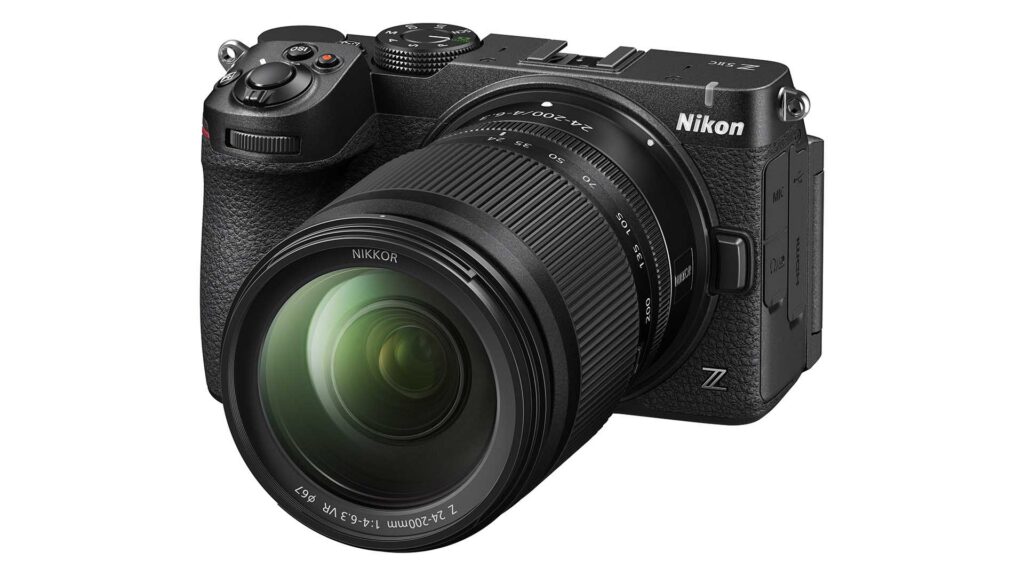
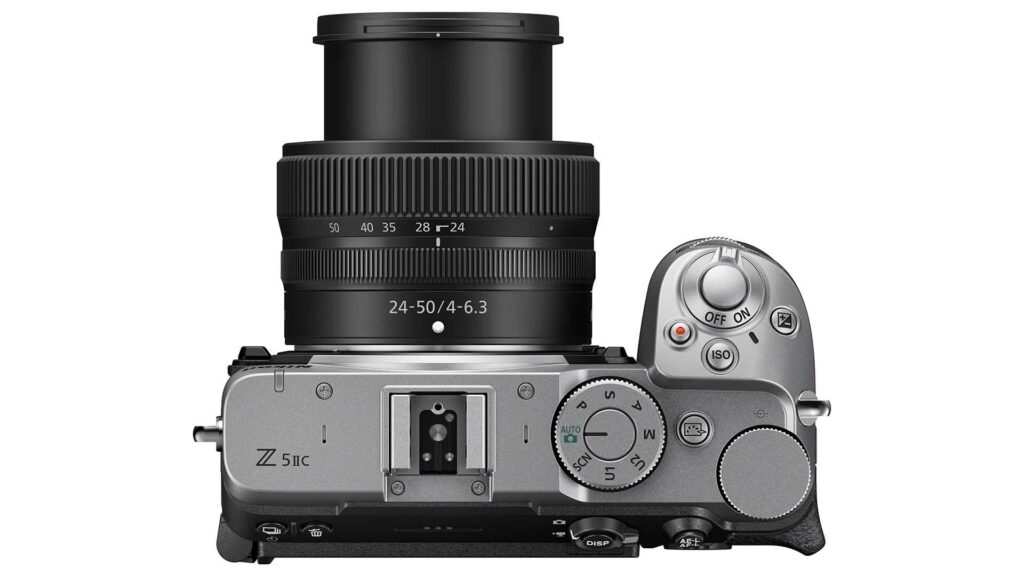
At the heart of the Nikon Z5IIC is a 24.5MP partially stacked FX format sensor, the same sensor as is used in the Nikon Z6III. It’s paired with Nikon’s EXPEED 7 processing engine.
The partially stacked design enables a faster sensor readout than a conventional sensor. That should be beneficial for autofocus and subject recognition because the camera can analyse changes in the scene more quickly. It should also help to keep rolling shutter distortion under control when the electronic shutter is used.
The Z5IIC can record RAW, JPEG and HEIF (High Efficiency Image File Format) images, while its standard sensitivity range for stills extends from ISO 100 to ISO 64,000. For video, the maximum standard sensitivity is ISO 51,200.
The phase detection autofocus system offers 273 points in Single-point AF mode and up to 299 points with Auto-area AF. Nikon also claims focusing sensitivity down to -10EV under its specified test conditions. That could be particularly useful for photographing family events, interiors, city streets after dark and other situations where the light level is low.
The Nikon Z5IIC also has 5-axis in-body VR, with Nikon claiming up to 7.5 stops of stabilisation at the centre of the frame and up to 6 stops towards the edges. Focus Point VR is also available, allowing the stabilisation system to take the location of the active focus point into account.
For action, the Z5IIC can shoot at up to 14fps. There’s also a C30 mode that uses the electronic shutter to shoot at 30fps.
The Nikon Z5IIC can record 4K video at up to 60p, although 4K 60p uses a DX crop. Alternatively, 4K footage can be recorded at up to 30p while Full HD is available at up to 120p.
There’s also N-Raw recording along with N-Log, HLG (Hybrid Log Gamma) and SDR (Standard Dynamic Range), giving anyone who becomes more interested in video greater scope for grading their footage.
In addition, there’s Product Review mode for anyone who presents objects to camera. When something is held towards the lens, the camera switches focus from the presenter to the object before returning to the presenter when it is removed. That could be useful for anyone creating content around photography, crafts, food, beauty or any number of other subjects where it’s helpful to show an object to the camera while recording yourself.
Nikon has also given the Z5IIC 15 scene modes, Imaging Recipes and a Film Grain feature. In addition, Imaging Recipes can be downloaded to the camera through Nikon Imaging Cloud, including recipes from Nikon, RED and Nikon creators.
I like having the option to create the look of an image at the shooting stage. Photography doesn’t always need to end with an evening in front of a computer and there are plenty of occasions when I’d rather have a JPEG that I’m happy to share straight from the camera.
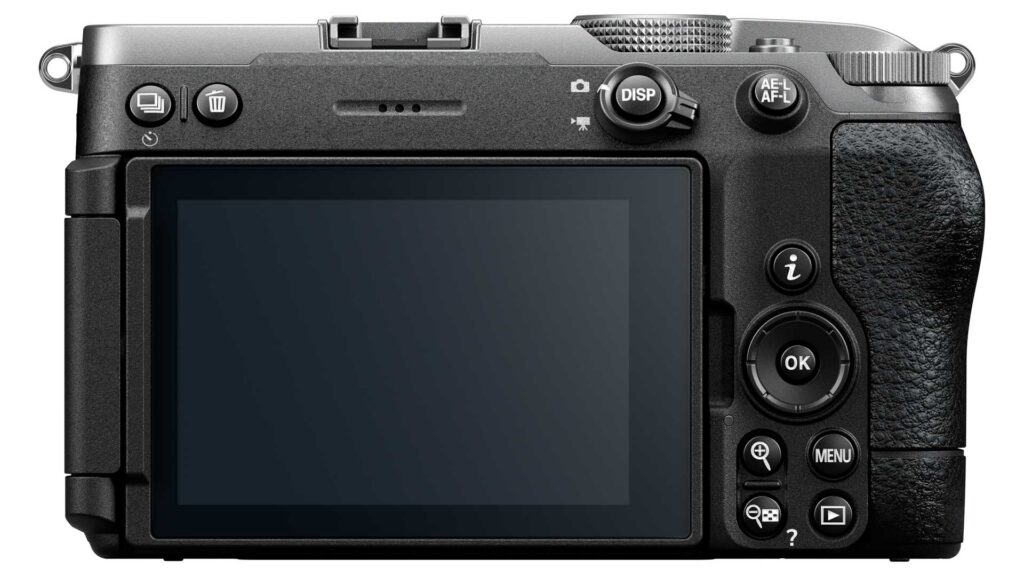
As I haven’t yet handled the Nikon Z5IIC, my comments about its build and handling are based on Nikon’s specifications, the product images supplied for the launch, and my knowledge of other Nikon cameras.
The Nikon Z5IIC measures approximately 134 x 80.5 x 72mm and weighs around 537g for the body. The lack of a viewfinder housing helps to give the camera a noticeably low, flat profile. That low weight is one of the aspects I’m particularly interested in investigating when I get a review sample. As female photographers often have fairly small hands, camera weight, grip shape and control positioning can make a significant difference to how comfortable a camera is over a full day of shooting.
Fortunately, Nikon hasn’t made the grip especially shallow in its attempt to keep the camera compact. Judging from the supplied images, there’s a substantial front grip and a pronounced thumb rest on the rear, but I’ll reserve judgement on how secure and comfortable it feels until I can actually hold the camera.
Nikon says the Z5IIC has a magnesium alloy frame and sealing to help keep out dust and moisture.
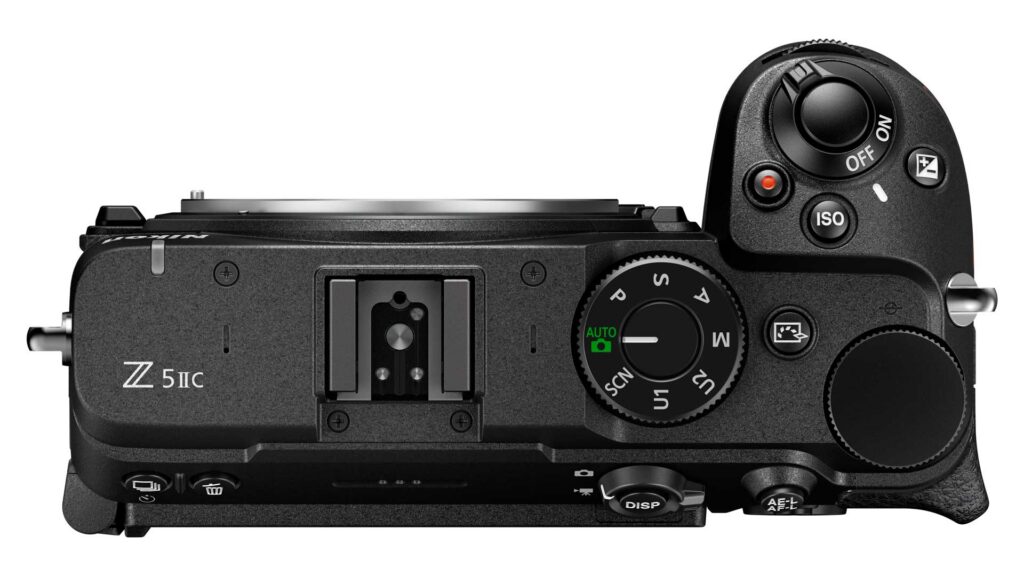
The Nikon Z5IIC’s controls are very similar to those on the Nikon Z5II, which won the SheClicks Award for the best enthusiast camera, so existing Nikon users should find their way around quickly.
The shutter release is surrounded by the power switch while the video record, ISO and exposure compensation buttons sit close to your right index finger. There’s a front command dial below the shutter release and a large rear command dial on the top plate, allowing key settings to be changed without relying entirely on the touchscreen.
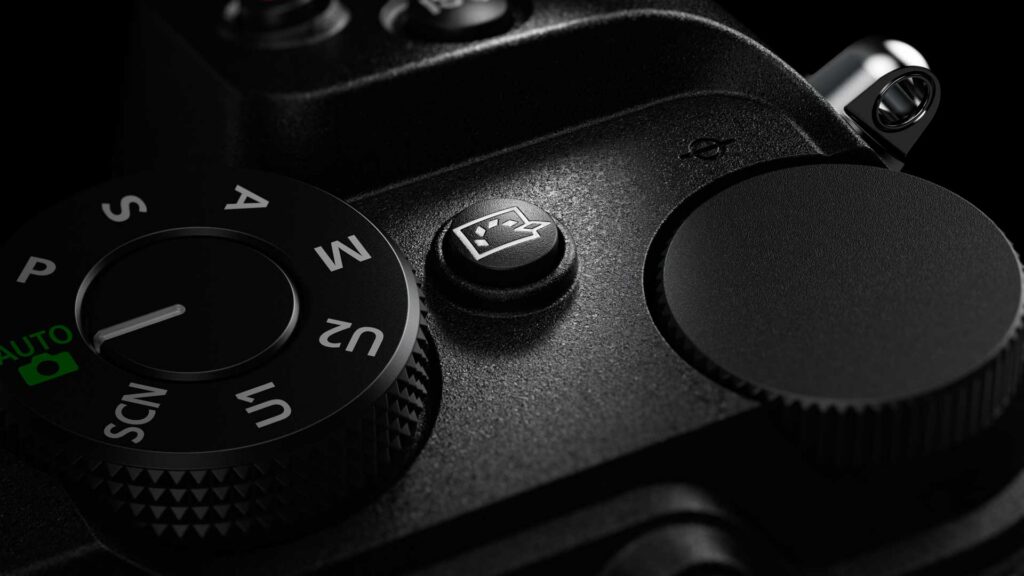
The large exposure mode dial has the usual P, S, A and M settings along with Auto, Scene and U1 and U2 user modes. The user modes are useful for saving combinations of settings that you want to recall quickly.
There are also two customisable Fn buttons beside the lens mount.
On the back of the camera, there are dedicated playback and delete buttons, a DISP button, an AE-L/AF-L button and Nikon’s i button for accessing commonly used settings. There’s also a four-way navigation controller with an OK button at its centre.
One notable difference between the Z5IIC and Z5II is that the Z5IIC doesn’t have a joystick for moving the autofocus point or navigating the menu. Normally, that would be a problem for me because I use a joystick regularly when composing through a viewfinder. However, its absence seems less significant on the Z5IIC because you’re composing on the rear screen. In that situation, tapping the screen where you want the camera to focus is a natural way of working.
The Nikon Z5IIC has a 3.2-inch vari-angle touchscreen with approximately 1.04 million dots. It can swing out to the side and rotate, which is useful for shooting from above or below head height, working in portrait or landscape orientation and recording yourself.
However, the Z5IIC doesn’t have a viewfinder and that’s likely to divide opinion. Video shooters are often quite at home composing footage on a screen and may not miss a viewfinder at all. Many photographers, however, are likely to find its absence a problem. A viewfinder is usually easier to use in bright sunlight and holding a camera to your eye provides another point of contact, which can help to keep it steady.
I also simply prefer using a viewfinder for quite a lot of my photography because I’m used to using one.
That said, photographers who have come to photography from a smartphone are less likely to see the lack of a viewfinder as a disadvantage. Composing on a screen will already feel completely normal.
The Z5IIC’s 1.04-million-dot screen resolution is fairly modest by current standards, so I’ll be interested to see how well it displays fine detail and how easy it is to view outdoors.
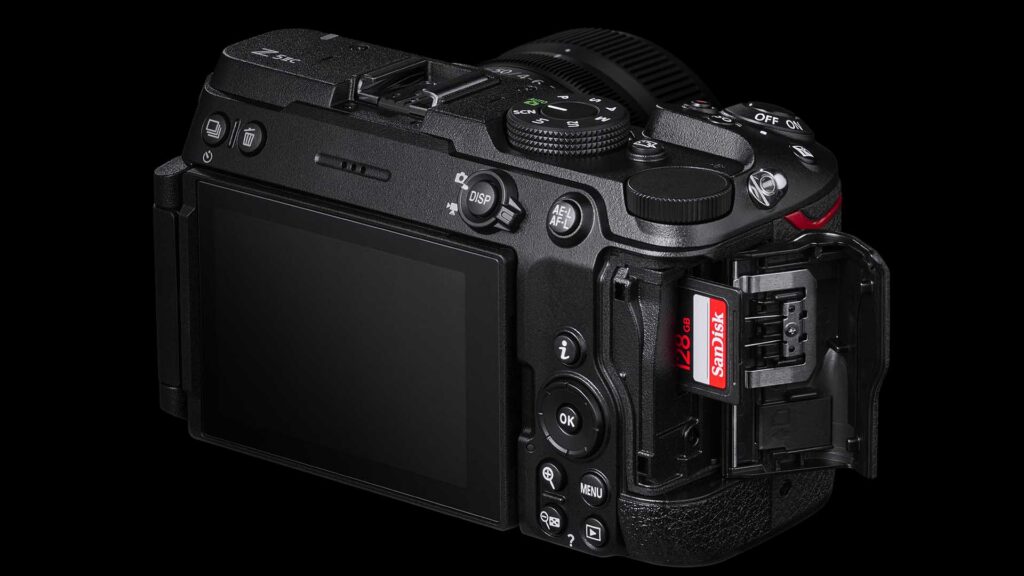
The Nikon Z5IIC has a single SD card slot that is compatible with UHS-II (Ultra High Speed II) cards. One slot will be enough for many photographers, but anyone photographing an unrepeatable event may prefer the security offered by a camera that can write images simultaneously to two cards.
Wireless connectivity includes 2.4GHz and 5GHz Wi-Fi and Bluetooth, along with compatibility with Nikon Imaging Cloud.
There’s also USB-C 3.2 Gen 2, HDMI Type D, an external stereo microphone socket and a headphone connection.
I haven’t yet shot with the Nikon Z5IIC, so I can’t say from experience how fast its autofocusing is, how well the subject recognition works or what its images look like. However, there are good reasons to be interested in its autofocus performance.
The Nikon Z6III’s autofocusing is very nippy and its subject detection system works well, so given that the Z5IIC uses the same 24.5MP partially stacked sensor and an EXPEED 7 processor, it seems likely that the Z5IIC will also deliver well in this area. Of course, I’ll need to test the Z5IIC before I can say how quickly it identifies a subject, how well it stays with something moving through the frame or how dependable its eye detection is.
The fish recognition mode could be interesting to try. Photographing fish through aquarium glass can be more challenging than it sounds because they move unpredictably, reflections can confuse the camera and light levels are often fairly low.
I’m also keen to investigate Nikon’s claimed -10EV autofocus sensitivity. If the Z5IIC’s autofocusing remains quick and decisive in very low light, it could be particularly useful for indoor events and evening photography.
The same applies to the stabilisation system. Nikon claims up to 7.5 stops of VR, but real-world performance varies depending on the lens, shutter speed, subject and photographer. I’ll see how far I can push it once I have the camera.
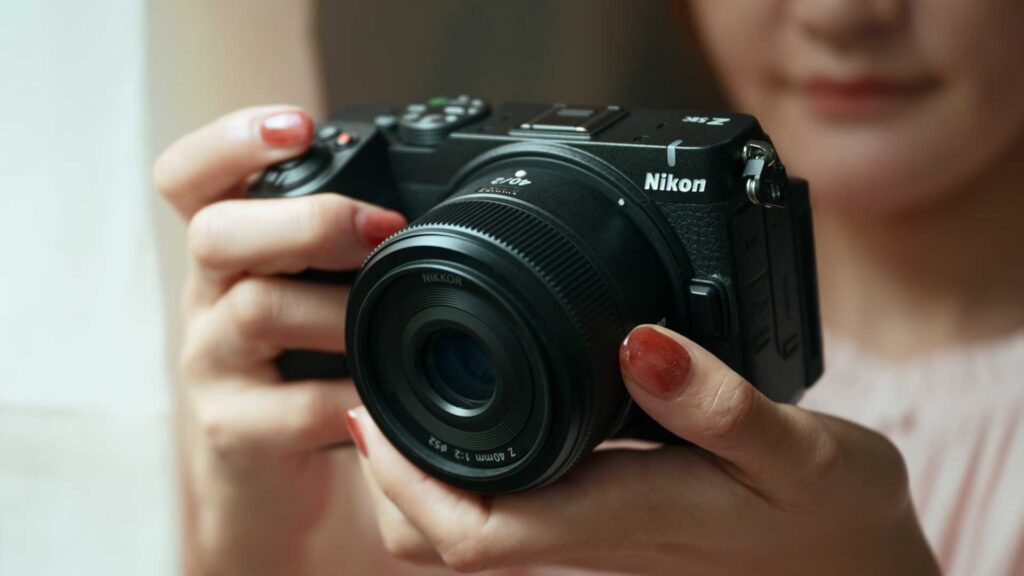
I haven’t taken any photographs with the Nikon Z5IIC yet, so it would be premature to make any claims about its image quality.
The 24.5MP resolution strikes a sensible balance between detail and file size, giving enough scope to make large prints or crop an image without producing unnecessarily huge files. I’ll be particularly interested in how the Z5IIC performs as the sensitivity rises through ISO 3200, ISO 6400 and ISO 12,800 towards its ISO 64,000 maximum.
I’ll also want to compare the raw and JPEG files closely. That’s especially relevant with a camera like the Z5IIC because Nikon is encouraging photographers to make use of Scene modes, Imaging Recipes and Film Grain. If those features are going to be genuinely useful, the JPEG output needs to look good without further processing.
Read About the SheClicks Awards
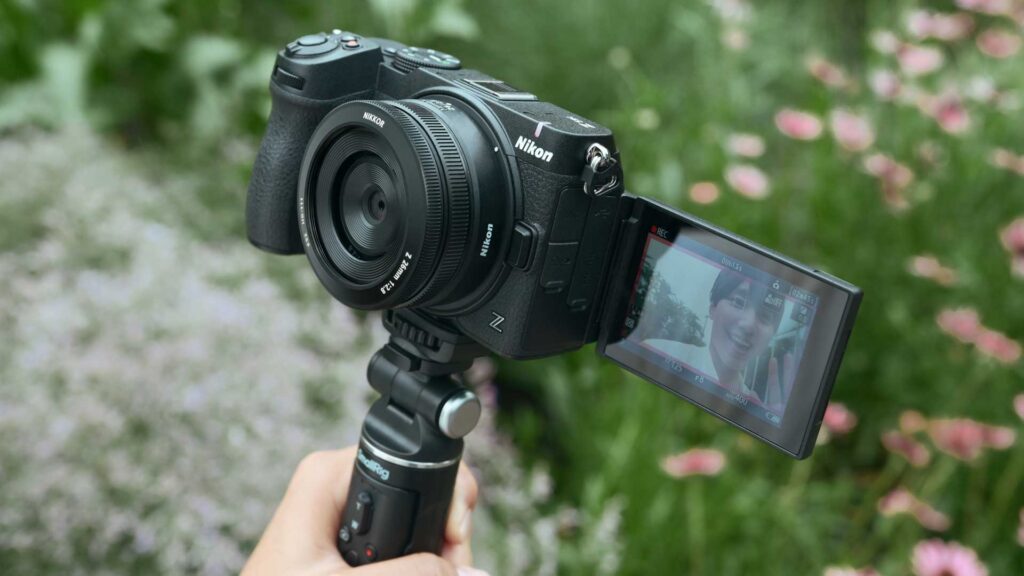
These images were supplied by Nikon.







My impressions of the Nikon Z5IIC are currently based on Nikon’s press briefing, press release and product images. I haven’t yet handled or shot with the camera, so there are some important questions still to answer. Nevertheless, its specifications make it an interesting proposition.
The Z5IIC brings some of Nikon’s recent technology to a £1,349 full-frame camera, including a partially stacked sensor, EXPEED 7 processing, sophisticated subject recognition, autofocus sensitivity down to -10EV and up to 7.5 stops of stabilisation. At the same time, Nikon has tried to make the camera approachable. Scene modes, Imaging Recipes, Film Grain and extensive touchscreen operation should be useful for anyone making the move from smartphone photography or a simpler camera.
I’m also interested in its relatively low weight. As a female photographer, I appreciate a camera that doesn’t add unnecessary bulk to my bag and at around 537g, the Z5IIC looks promising for travel and everyday photography.
The lack of a viewfinder is the biggest reservation for me. I expect there will be plenty of occasions when I’d prefer to put the camera to my eye, particularly in bright conditions. However, someone accustomed to composing on a smartphone may feel very differently.
Likewise, while I would normally dislike not having a joystick, it makes more sense when the touchscreen is the main way of composing and selecting the focus point.
There are other compromises, notably the single memory card slot and DX crop with 4K 60p video, but the Z5IIC looks less like a stripped-down Z5II and more like a different take on an affordable full-frame camera.
I’m looking forward to getting my hands on one to find out whether its autofocus, stabilisation, image quality and handling match the promise of the specification.