
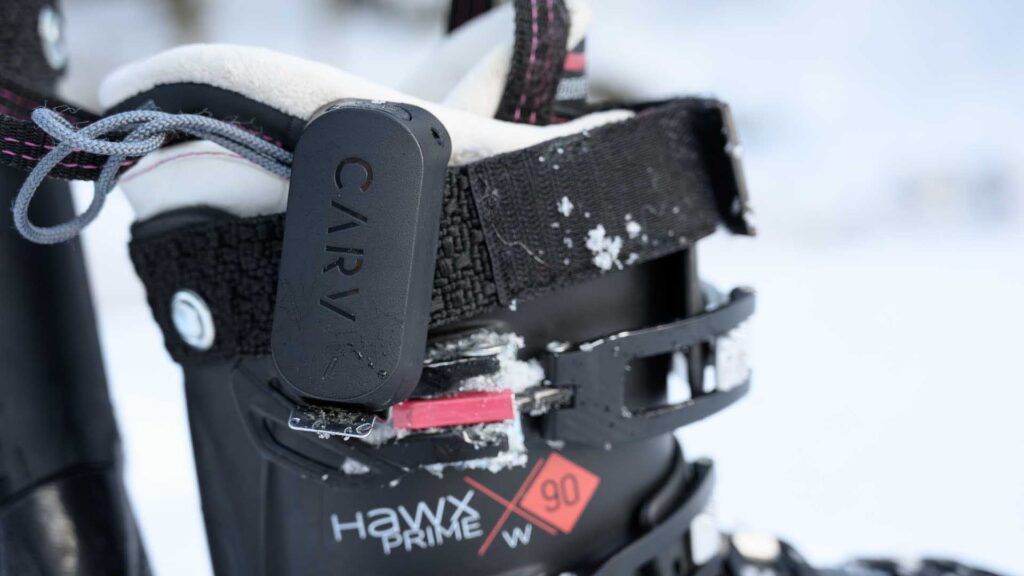
Carv 2 is an innovative digital ski coach that adapts to your ability and the terrain to help improve your technique and build your confidence on the slopes. It’s discreet, easy to use and makes skiing feel more like a game – albeit with real, measurable progression. I’ve been using Carv since it launched and version 2 is by far the most convenient and enjoyable to use. Some of the feedback can be a bit repetitive, and not everyone will love the subscription model, but it’s a brilliant way to keep learning on your own terms.
The Carv 2 is an unusual product for SheClicks because it’s not related to photography, but I’ve been using it since it first became available and I’m squarely in the target market, so I decided it deserves a review. It’s a smart digital ski coaching system that clips onto your ski boots and connects to a smartphone app to deliver real-time feedback and personalised instruction.
It’s designed for skiers at all levels, from beginners looking to move on from snowplough turns, to advanced skiers refining their carving or building control on steeper slopes. Using motion analysis and AI, Carv 2 offers coaching that’s based on your ability and the terrain you’re on.
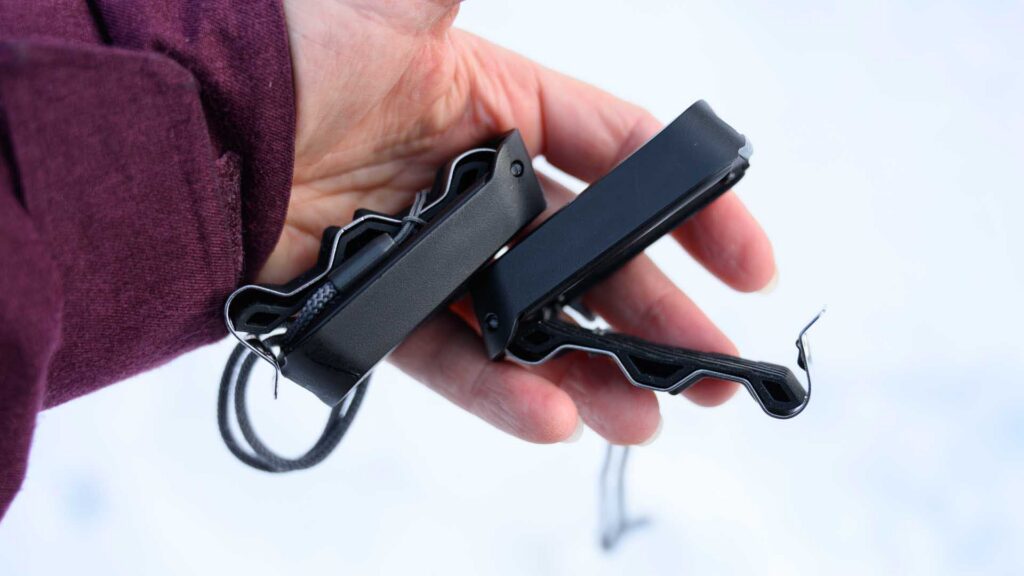
Unlike the original version, Carv 2 doesn’t need boot inserts or cable connections. You just clip the units onto your boots, connect them to the app, and go.
Carv now works on a subscription model. A season pass costs £199 per year and includes the Carv 2 sensors free of charge. Alternatively, there’s a 6-day pass priced at £99 per year, but you pay a one-off £129 for the sensors, making the first year £228. From year two onwards, it’s just £99 annually for the 6-day plan. It’s a great option if you usually ski for one week a year.
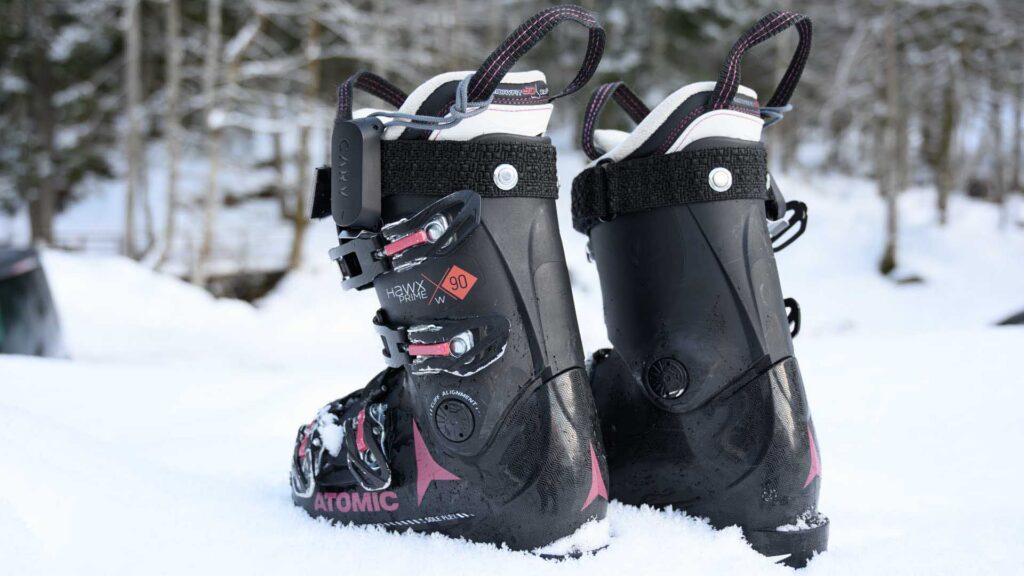
Each Carv 2 unit uses a 6-axis motion sensor (accelerometer and gyroscope) to track your ski boot movements. The original Carv relied on underfoot pressure sensors in boot inserts, but Carv’s team found that boot movement gives more useful feedback.
Now, the system focuses on how your boots (and therefore skis) move, making Carv 2 more accurate and easier to use. The Motion AI engine is trained on over 500 million turns and can now take terrain into account too. So whether you’re on smooth pistes or bumpier runs, the coaching adjusts accordingly.
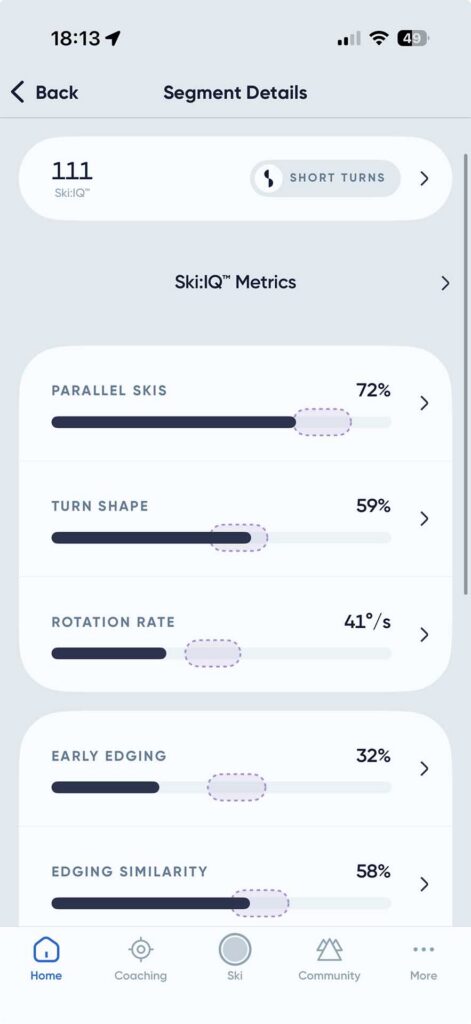
It tracks metrics like:
Early forward movement
Centred balance
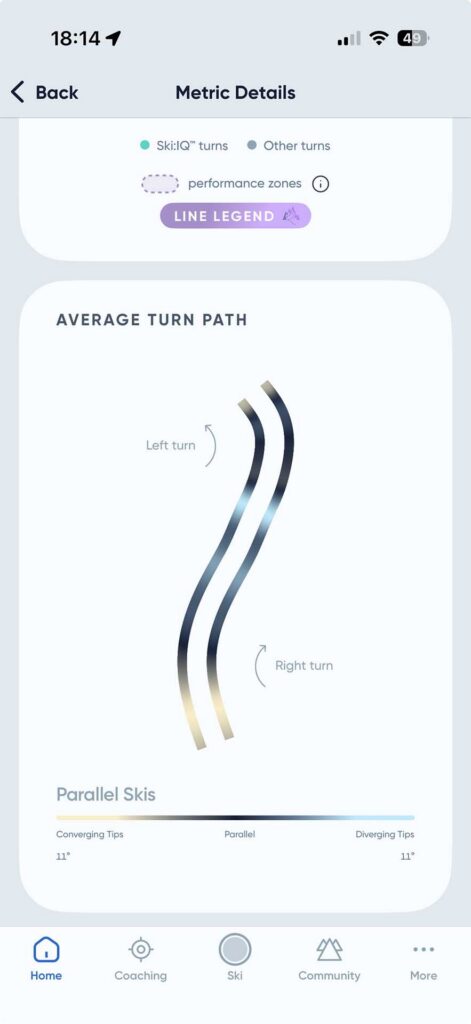
Parallel skis
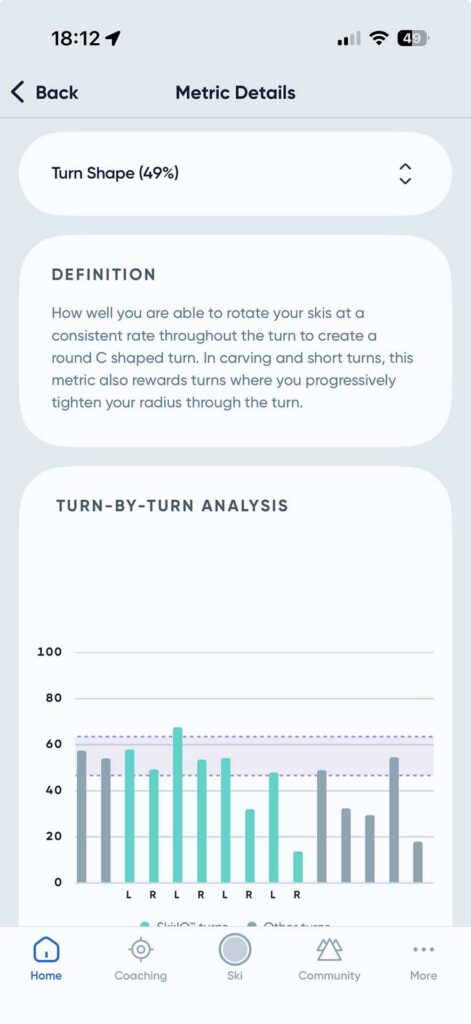
Turn shape
Edge angle and early edging
Edging similarity between skis
Turn G-force
Weight release
These are used to calculate your Ski IQ score, which reflects your overall technique and progress.
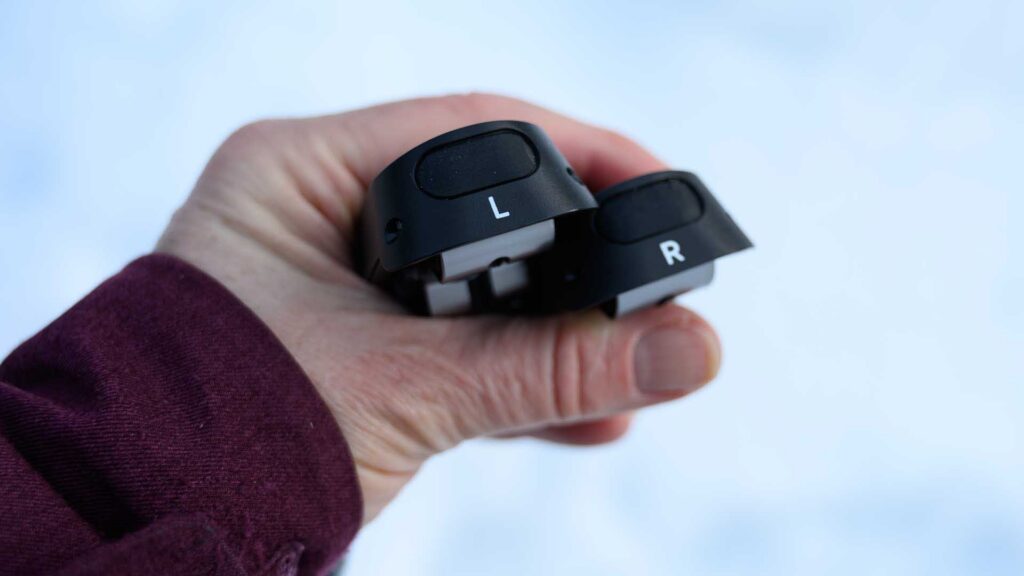
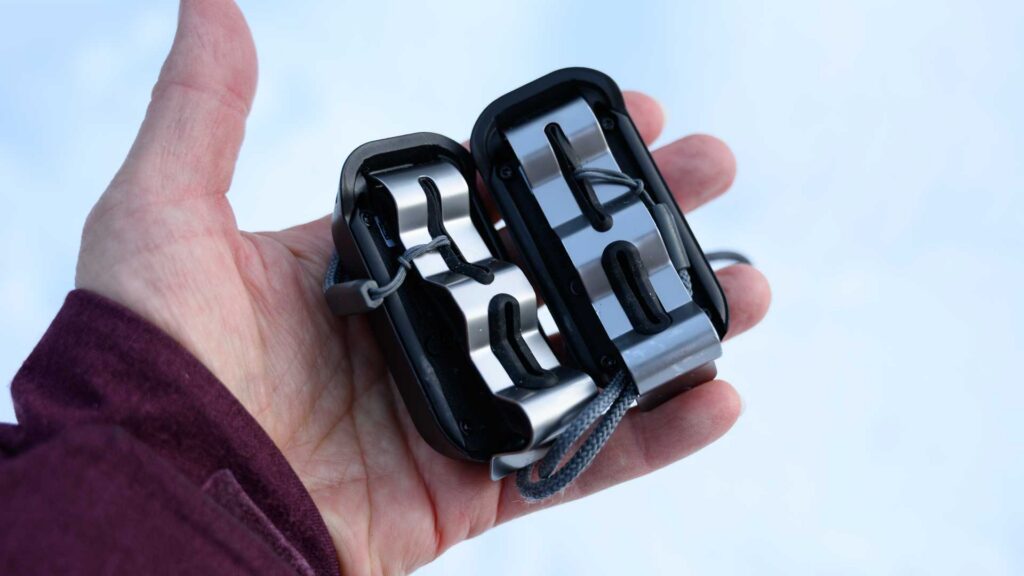
The sensors are lightweight at 34g each and clip securely to the strap on the outside of your boots. I find they fit well even on my smaller boots and the clips have never come undone, however, I like the reassurance of using short lanyards looped on to my ski boots.
They’re waterproof and the battery lasts up to five days. Charging is via USB-C, which is a welcome change from the original’s bespoke connector.
Further good news,, the setup is simple. After charging, you pair the sensors with the Carv app via Bluetooth, and once you’re on the slopes, you just hit record and start skiing. You’ll need earbuds if you want to hear the coaching clearly rather than muffled from your coat pocket.
The sensors automatically detect when you’re on a ski lift and give audible tips on your last run while you head back up the mountain.
I started using the original Carv in 2016 when it launched on Kickstarter and I was asked to test it for T3. After a few hours using it, I could see how it could improve my skiing and I invested in a set. I’ve been using it on every ski trip (two weeks a year) since – upgrading to Carv 2 when it became available in November 2024.
Carv gathers data about every turn that you make as you ski. It does this for everyone who uses it and it means that the company has a huge data set that it can draw on to analyse and tweak its algorithm. Consequently, over the years, there have been changes made to the app, the information it gives out and how it assesses your skiing.
At the heart of the Carv system is the Ski IQ, a number that indicates how good a skier you are. According to Carv, the average skier on piste will score around 100. Intermediate skiers are likely to score around 110 to 125, experts fall into the 125–140 bracket, while ‘professionals’ can expect to hit over 140. Naturally, a Ski IQ of 140 is something of a holy grail for enthusiast or intermediate skiers.
When Carv makes a change to its algorithm, it can result in a skier’s Ski IQ going up or down without them having skied a slope in months. This is a subject of much discussion on the official Carv Skiers’ Community Facebook group. Naturally, if your score drops, you aren’t a worse skier than you were the day before, but it can be a cause for tears when someone loses their Mountain Master (140+) rating and is demoted to an Alpine Ace (130+).
Of course, skiing conditions have a huge impact on your technique and therefore your Carv Ski IQ. As a result, I tend to focus on my scores on a day-by-day or even hour-by-hour basis. Towards the end of the day, when your legs are tired and the piste is cut-up or covered in moguls, for example, your technique isn’t going to be quite what it was on your third or fourth run when you’re warmed up and the piste was pristine.
But it’s not all about scores. Carv is a training tool that can help you develop better technique. There are training drills, videos and tips from professional skiers available via the app.
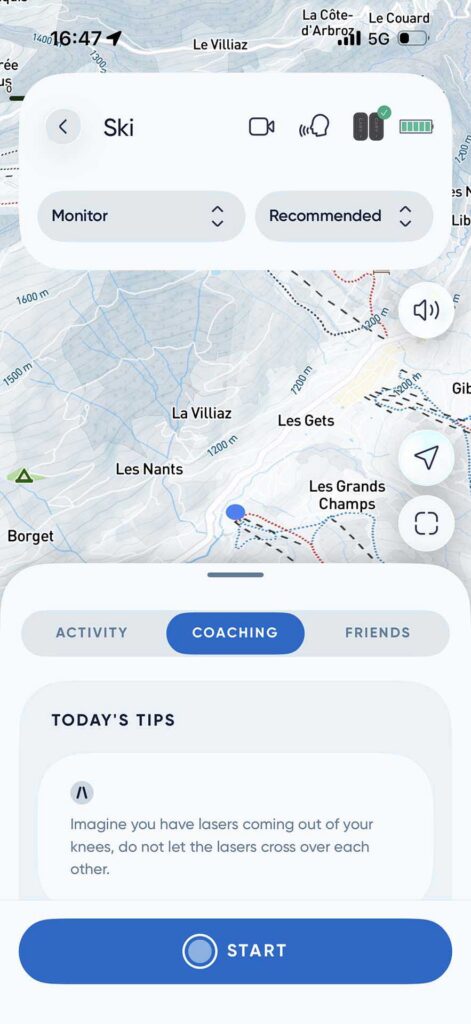
There are three main modes available in the app: Track, Learn and Train. Track records all your skiing (turns) and gives you a Ski IQ each time you stop. Learn adds in some tips to improve your Ski IQ, while Train gives you coaching to help you progress. For reasons I can’t quite fathom, at the bottom of the screen with the Track, Learn and Train options, there’s a link to access two additional modes: Active Coach and Monitor. I think it would be helpful if they were on the same screen as the three main modes.
It’s also possible to access the Legacy modes, with other training options and challenges.
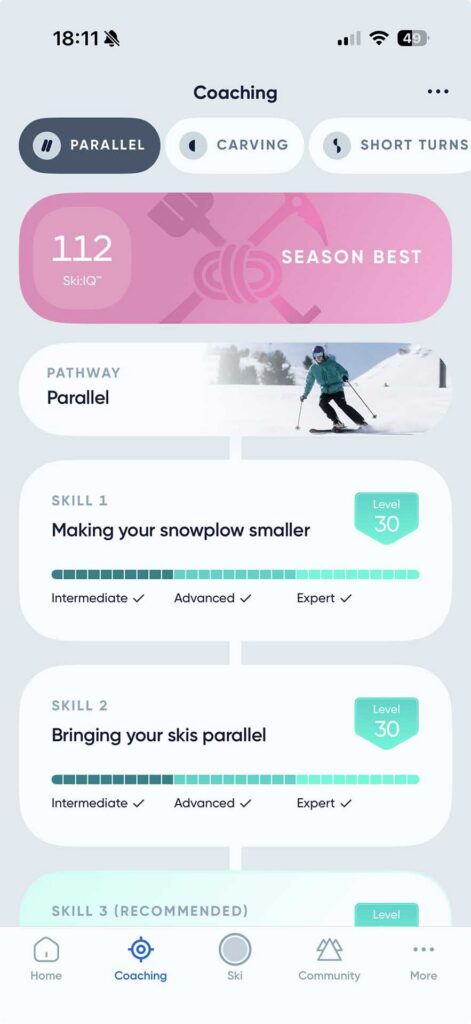
Although I use other modes for variety, I like using the Active Coach best. When this is selected you can choose one of 10 metrics to work on. Carv tells you to ski making at least eight turns so it can calibrate the training and then sets a target measurement for you to aim for. As you ski, you hear a bright ping every time you hit or exceed the target and a dull tap if you don’t. As the number of pings increases, you progress through the levels (there are 30 for each metric).
There’s also the option in Active Coach to set the measure metric to ‘Recommended’. I found this very useful because it targets your weaker areas, giving you coaching to improve. This coaching advice can get repetitive though.
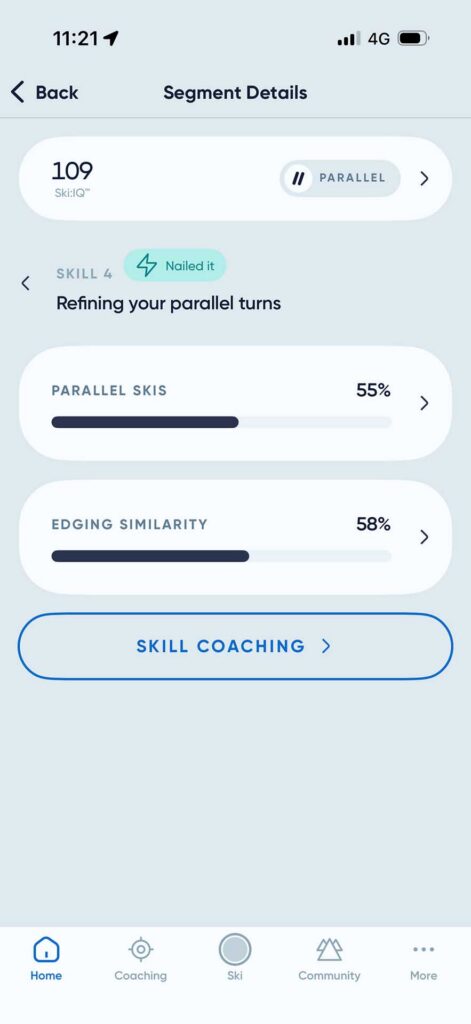
The coaching doesn’t end when you unclip your skis, because you can examine the data Carv has gathered on your phone and see where you need to make improvements.
Without question, Carv has made me a better skier. I feel more stable and in control across a wider range of conditions. I don’t worry about ice the way I used to and I’m much more confident tackling different terrain.
My current Ski IQ is 119 and while I’ve been in that ballpark for a while, I hit over 100 more consistently and across more varied runs than I did before. Carv helps you develop resilience and adaptability as well as better technique.
There are a few things I’d like to see improved, particularly the repetition in audio coaching and the visibility of all coaching modes in the app. But overall, I really enjoy using Carv and love the sense of progress it gives me.